

Doubleday Canada
Hockey Night Fever
Hockey Night Fever
Couldn't load pickup availability
Collapsible content
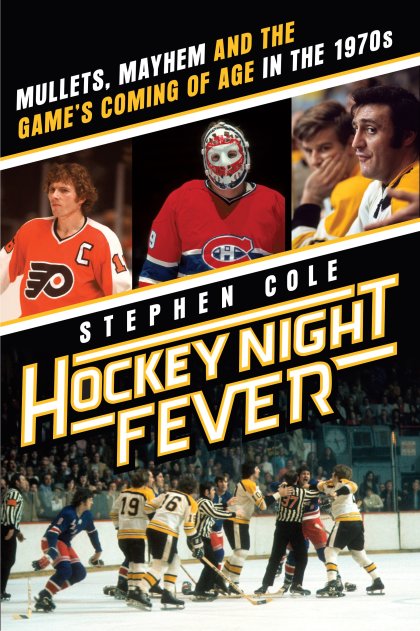
ABOUT
"Lady Byng died in Boston" read a sign in the Garden arena in 1970, a cheery dismissal of the NHL trophy awarded the game's most gentlemanly player. A new age of hockey was dawning. For 30 years, hockey was an orderly and (relatively) well-behaved sport. There was one Commissioner, six teams and five colours--red, white, black, blue and yellow. Oh, and one nationality. Until 1967, every player, coach, referee and GM in the NHL had been a Canadian. And then came NHL expansion, the founding of the WHA, and garish new uniforms. The Seventies had arrived: the era that gave us not only disco, polyester suits, lava lamps and mullets but also the movie Slap Shot and the arrest of ten NHL players for on-ice mayhem. But it also gave us hockey's greatest encounter (the 1972 Canada-Russia Summit), its most splendid team, the 1976-77 Montreal Canadiens, and the most aesthetically satisfying game--the three-all tie on New Year's Eve, 1975, between the Canadiens and the Soviet Red Army.
Modern hockey was born in the sport's wild, sensational, sometimes ugly Seventies growth spurt. The forces at play in the decade's battle for hockey supremacy--dazzling speed vs. brute force--are now, for better or worse, part of hockey's DNA. This book is a welcome reappraisal of the ten years that changed how the sport was played and experienced. Informed by first-hand interviews with players and game officials, and sprinkled with sidebars on the art and artifacts that defined Seventies hockey, the book brings dramatically alive hockey's most eventful, exciting decade.
STANDARD, PRIMARY, DM AND VARIANT COVERS
Standard and Primary covers are widely available through general retailers. They often have higher print runs and can be cheaper, especially during sales.
In contrast, Direct Market (DM) and variant covers are primarily sold in comic shops. DM editions tend to have more limited availability and may be more valuable to collectors.
The main differences lie in artwork style, availability, price, and collector appeal. Ultimately, the choice between standard and variant covers depends on personal preference, budget, and individual collecting goals.
PRODUCT TYPES
Comic book enthusiasts have various formats to choose from when collecting their favorite stories.
Here's a brief overview of the main types:
Omnibus
- Large, hardcover collections
- Usually contain complete runs or extensive story arcs
- Typically 800-1000+ pages
- Higher price point, often €100-€150
Oversized Hardcover (OHC)
- Similar dimensions to omnibus, but thinner
- Collect shorter runs or story arcs
- Usually 300-600 pages
- Priced between €30-€50
Hardcover (HC)
- Standard-sized hardcover books
- Collect 6-12 issues typically
- Similar dimensions to single issues, but with a hard cover
- Priced around €25-€35
Trade Paperback (TP)
- Softcover collections
- Standard comic book size
- Usually collect 4-6 issues
- Most affordable option, typically €15-€25
Other Formats
- Absolute Editions: Oversized, deluxe hardcovers (mainly DC Comics)
- Compendiums: Massive paperback collections
- Graphic Novels (OGN/GN): Original stories not previously released as single issues
The choice between these formats often depends on personal preference, budget, and collecting goals. Omnibus and OHC editions offer larger artwork and more content but at a higher price, while TPs provide a more affordable way to collect complete story arcs