

Random House Publishing Group
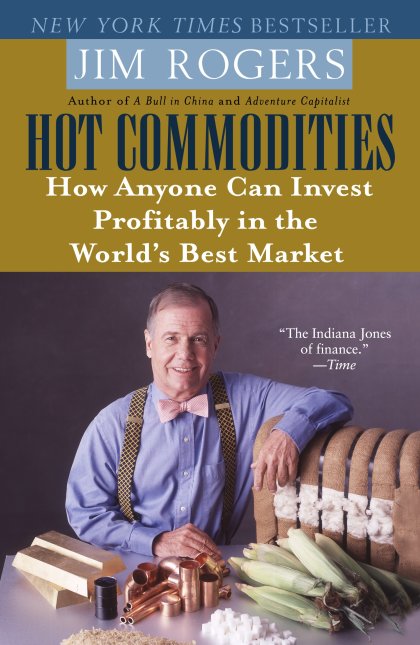
Hot Commodities
Hot Commodities
Couldn't load pickup availability
Collapsible content
ABOUT
Before Jim Rogers hit the road to write his bestselling books Investment Biker and Adventure Capitalist, he was one of the world’s most successful investors. He cofounded the Quantum Fund and made so much money that he never needed to work again. Yet despite his success, Rogers has never written a book of practical investment advice–until now.
In Hot Commodities, Rogers offers the lowdown on the most lucrative markets for today and tomorrow. In 1998, gliding under the radar, a bull market in commodities began. Rogers thinks it’s going to continue for at least fifteen years–and he’s put his money where his mouth is: In 1998, he started his own commodities index fund. It’s up 165% since then, with more than $200 million invested, and it’s the single-best performing index fund in the world in any asset class. Less risky than stocks and less sluggish than bonds,, commodities are where the money is–and will be in the years ahead. Rogers’s strategies are simple and straightforward. You can start small–a few thousand dollars will suffice. It’s all about putting your money into stuff you understand, the basic materials of everyday life, like coal, sugar, cotton, corn, or crude oil. Once you recognize the cyclical and historical trading patterns outlined here, you’ll be on your way.
In language that is both colorful and accessible, but Rogers explains why the world of commodity investing can be one of the simplest of all–and how commodities are the bases by which investors can value companies, markets, and whole economies. To be a truly great investor is to know something about commodities.
For small investors and high rollers alike, Hot Commodities is as good as gold . . . or lead, or aluminum, which are some of the commodities Rogers says could be as rewarding for investors.
STANDARD, PRIMARY, DM AND VARIANT COVERS
Standard and Primary covers are widely available through general retailers. They often have higher print runs and can be cheaper, especially during sales.
In contrast, Direct Market (DM) and variant covers are primarily sold in comic shops. DM editions tend to have more limited availability and may be more valuable to collectors.
The main differences lie in artwork style, availability, price, and collector appeal. Ultimately, the choice between standard and variant covers depends on personal preference, budget, and individual collecting goals.
PRODUCT TYPES
Comic book enthusiasts have various formats to choose from when collecting their favorite stories.
Here's a brief overview of the main types:
Omnibus
- Large, hardcover collections
- Usually contain complete runs or extensive story arcs
- Typically 800-1000+ pages
- Higher price point, often €100-€150
Oversized Hardcover (OHC)
- Similar dimensions to omnibus, but thinner
- Collect shorter runs or story arcs
- Usually 300-600 pages
- Priced between €30-€50
Hardcover (HC)
- Standard-sized hardcover books
- Collect 6-12 issues typically
- Similar dimensions to single issues, but with a hard cover
- Priced around €25-€35
Trade Paperback (TP)
- Softcover collections
- Standard comic book size
- Usually collect 4-6 issues
- Most affordable option, typically €15-€25
Other Formats
- Absolute Editions: Oversized, deluxe hardcovers (mainly DC Comics)
- Compendiums: Massive paperback collections
- Graphic Novels (OGN/GN): Original stories not previously released as single issues
The choice between these formats often depends on personal preference, budget, and collecting goals. Omnibus and OHC editions offer larger artwork and more content but at a higher price, while TPs provide a more affordable way to collect complete story arcs