

Harmony/Rodale/Convergent
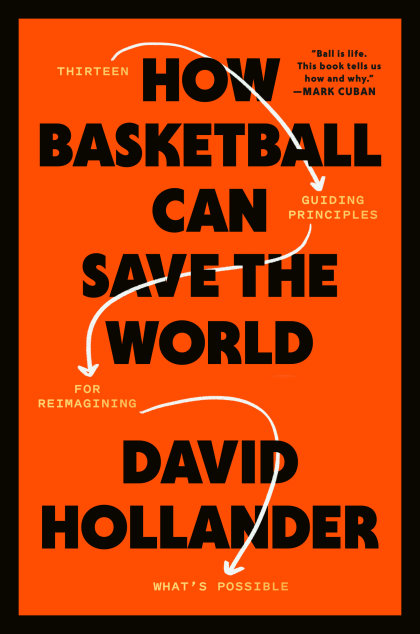
How Basketball Can Save the World
How Basketball Can Save the World
Couldn't load pickup availability
Collapsible content
ABOUT
NBA and WNBA superstars, Hall of Fame players, coaches, and leading cultural figures have all dropped by New York University Professor David Hollander’s course “How Basketball Can Save the World” course to debate and give insights on how the underlying principles of the game can provide a new blueprint for addressing our diverse challenges and showing what’s possible beyond the court.
Now, in How Basketball Can Save the World, Hollander takes us out of the classroom to present a beautiful new philosophy with contributions by many of his past guests and based on values inherent to basketball, such as inclusion and the balancing of individual success with the needs of the collective. These principles move us beyond conflict and confusion toward a more harmonious and meaningful future:
- Positionless-ness: In basketball, players aren’t siloed into just one position or responsibility. In life, we can learn to be more adaptive to the challenges we face by embracing a positionless mindset.
- Human Alchemy: We talk a lot about team chemistry, but team alchemy means the creation of something totally new—a team far greater than the sum of its parts.
- Sanctuary: Basketball offers players a critical space to feel safe, free, and expressive. Fostering similar spaces in the real world can encourage people to be their best, happiest, and most productive selves.
- Transcendence: Basketball is about defying gravity, becoming weightless, and flying higher than anyone ever has before. By seeking out this principle, we can elevate ourselves and those around us to a new plane of experience.
Whether you’re a seasoned veteran of the game or have never set foot on a court, How Basketball Can Save the World will empower you to become more resilient, tolerant, and wise in your relationship with yourself, others, and the world around you.
STANDARD, PRIMARY, DM AND VARIANT COVERS
Standard and Primary covers are widely available through general retailers. They often have higher print runs and can be cheaper, especially during sales.
In contrast, Direct Market (DM) and variant covers are primarily sold in comic shops. DM editions tend to have more limited availability and may be more valuable to collectors.
The main differences lie in artwork style, availability, price, and collector appeal. Ultimately, the choice between standard and variant covers depends on personal preference, budget, and individual collecting goals.
PRODUCT TYPES
Comic book enthusiasts have various formats to choose from when collecting their favorite stories.
Here's a brief overview of the main types:
Omnibus
- Large, hardcover collections
- Usually contain complete runs or extensive story arcs
- Typically 800-1000+ pages
- Higher price point, often €100-€150
Oversized Hardcover (OHC)
- Similar dimensions to omnibus, but thinner
- Collect shorter runs or story arcs
- Usually 300-600 pages
- Priced between €30-€50
Hardcover (HC)
- Standard-sized hardcover books
- Collect 6-12 issues typically
- Similar dimensions to single issues, but with a hard cover
- Priced around €25-€35
Trade Paperback (TP)
- Softcover collections
- Standard comic book size
- Usually collect 4-6 issues
- Most affordable option, typically €15-€25
Other Formats
- Absolute Editions: Oversized, deluxe hardcovers (mainly DC Comics)
- Compendiums: Massive paperback collections
- Graphic Novels (OGN/GN): Original stories not previously released as single issues
The choice between these formats often depends on personal preference, budget, and collecting goals. Omnibus and OHC editions offer larger artwork and more content but at a higher price, while TPs provide a more affordable way to collect complete story arcs