

Crown
How I Paid for College
How I Paid for College
Couldn't load pickup availability
Collapsible content
ABOUT
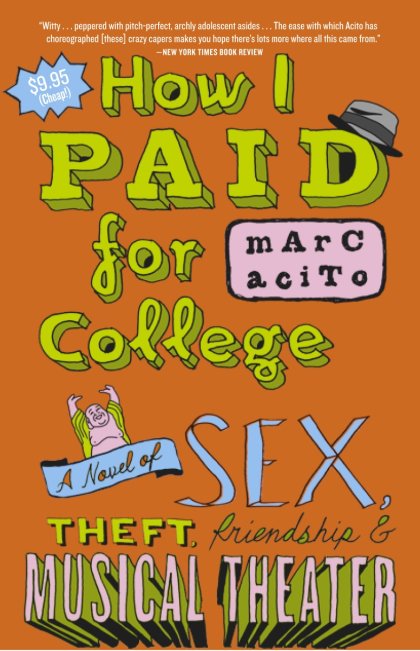
It’s 1983 in Wallingford, New Jersey, a sleepy bedroom community outside of Manhattan. Seventeen-year-old Edward Zanni, a feckless Ferris Bueller–type, is Peter Panning his way through a carefree summer of magic and mischief. The fun comes to a halt, however, when Edward’s father remarries and refuses to pay for Edward to study acting at Juilliard.
Edward’s truly in a bind. He’s ineligible for scholarships because his father earns too much. He’s unable to contact his mother because she’s somewhere in Peru trying to commune with Incan spirits. And, as a sure sign he’s destined for a life in the arts, Edward’s incapable of holding down a job. So he turns to his loyal (but immoral) misfit friends to help him steal the tuition money from his father, all the while practicing for his high school performance of Grease. Disguising themselves as nuns and priests, they merrily scheme their way through embezzlement, money laundering, identity theft, forgery, and blackmail. But, along the way, Edward also learns the value of friendship, hard work, and how you’re not really a man until you can beat up your father—metaphorically, that is.
How I Paid for College is a farcical coming-of-age story that combines the first-person tone of David Sedaris with the byzantine plot twists of Armistead Maupin. It is a novel for anyone who has ever had a dream or a scheme, and it marks the introduction to an original and audacious talent.
STANDARD, PRIMARY, DM AND VARIANT COVERS
Standard and Primary covers are widely available through general retailers. They often have higher print runs and can be cheaper, especially during sales.
In contrast, Direct Market (DM) and variant covers are primarily sold in comic shops. DM editions tend to have more limited availability and may be more valuable to collectors.
The main differences lie in artwork style, availability, price, and collector appeal. Ultimately, the choice between standard and variant covers depends on personal preference, budget, and individual collecting goals.
PRODUCT TYPES
Comic book enthusiasts have various formats to choose from when collecting their favorite stories.
Here's a brief overview of the main types:
Omnibus
- Large, hardcover collections
- Usually contain complete runs or extensive story arcs
- Typically 800-1000+ pages
- Higher price point, often €100-€150
Oversized Hardcover (OHC)
- Similar dimensions to omnibus, but thinner
- Collect shorter runs or story arcs
- Usually 300-600 pages
- Priced between €30-€50
Hardcover (HC)
- Standard-sized hardcover books
- Collect 6-12 issues typically
- Similar dimensions to single issues, but with a hard cover
- Priced around €25-€35
Trade Paperback (TP)
- Softcover collections
- Standard comic book size
- Usually collect 4-6 issues
- Most affordable option, typically €15-€25
Other Formats
- Absolute Editions: Oversized, deluxe hardcovers (mainly DC Comics)
- Compendiums: Massive paperback collections
- Graphic Novels (OGN/GN): Original stories not previously released as single issues
The choice between these formats often depends on personal preference, budget, and collecting goals. Omnibus and OHC editions offer larger artwork and more content but at a higher price, while TPs provide a more affordable way to collect complete story arcs