

Harmony/Rodale/Convergent
How to ADHD
How to ADHD
Couldn't load pickup availability
Collapsible content
ABOUT
“The world of ADHD has been waiting for this book with bated breath for many years. If there’s a fairy godmother of our lot, it’s Jessica McCabe.”—Edward Hallowell, MD, coauthor of Driven to Distraction and ADHD 2.0
Forget “try harder.” When your brain works differently, you need to try different.
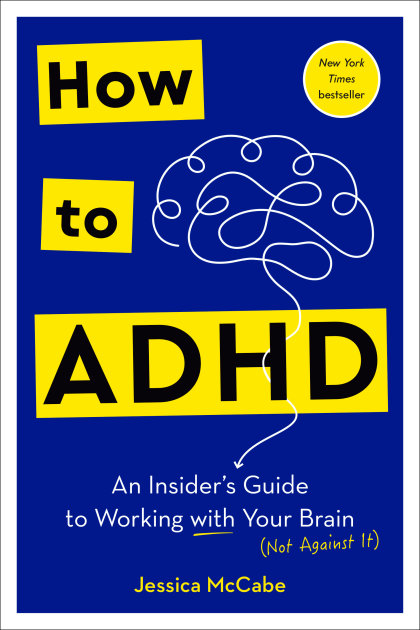
Diagnosed with ADHD at age twelve, Jessica struggled with a brain that she didn’t understand. She lost things constantly, couldn’t finish projects, and felt like she was putting more effort in than everyone around her while falling further and further behind. At thirty-two years old—broke, divorced, and living with her mom—Jessica decided to look more deeply into her ADHD challenges. She reached out to experts, devoured articles, and shared her discoveries on YouTube.
In How to ADHD, Jessica reveals the tools that have changed her life while offering an unflinching look at the realities of living with ADHD. The key to navigating a world not built for the neurodivergent brain, she discovered, isn’t to fix or fight against its natural tendencies but to understand and work with them. She explains how ADHD affects everyday life, covering executive function impairments, rejection sensitivity, difficulties with attention regulation, and more. You’ll also find ADHD-specific strategies for adapting your environment, routines, and systems, including:
• Boost the signal and decrease the noise. Facilitate focus by putting your goals where you can see them and fighting distractions with distractions.
• Have less stuff to manage. Learn why you have trouble planning and prioritizing, and why doing more starts with doing less.
• Build your “time wisdom.” Work backward when you plan, and track how long it actually takes you to do something.
• Learn about your emotions. Understand how naming your emotions and letting yourself experience them can make them easier to regulate.
With quotes from Jessica’s online community, chapter summaries, and reading shortcuts designed for the neurodivergent reader, How to ADHD will help you recognize your strengths and challenges, tackle “bad brain days,” and be kinder to yourself in the process.
STANDARD, PRIMARY, DM AND VARIANT COVERS
Standard and Primary covers are widely available through general retailers. They often have higher print runs and can be cheaper, especially during sales.
In contrast, Direct Market (DM) and variant covers are primarily sold in comic shops. DM editions tend to have more limited availability and may be more valuable to collectors.
The main differences lie in artwork style, availability, price, and collector appeal. Ultimately, the choice between standard and variant covers depends on personal preference, budget, and individual collecting goals.
PRODUCT TYPES
Comic book enthusiasts have various formats to choose from when collecting their favorite stories.
Here's a brief overview of the main types:
Omnibus
- Large, hardcover collections
- Usually contain complete runs or extensive story arcs
- Typically 800-1000+ pages
- Higher price point, often €100-€150
Oversized Hardcover (OHC)
- Similar dimensions to omnibus, but thinner
- Collect shorter runs or story arcs
- Usually 300-600 pages
- Priced between €30-€50
Hardcover (HC)
- Standard-sized hardcover books
- Collect 6-12 issues typically
- Similar dimensions to single issues, but with a hard cover
- Priced around €25-€35
Trade Paperback (TP)
- Softcover collections
- Standard comic book size
- Usually collect 4-6 issues
- Most affordable option, typically €15-€25
Other Formats
- Absolute Editions: Oversized, deluxe hardcovers (mainly DC Comics)
- Compendiums: Massive paperback collections
- Graphic Novels (OGN/GN): Original stories not previously released as single issues
The choice between these formats often depends on personal preference, budget, and collecting goals. Omnibus and OHC editions offer larger artwork and more content but at a higher price, while TPs provide a more affordable way to collect complete story arcs