

Penguin Publishing Group
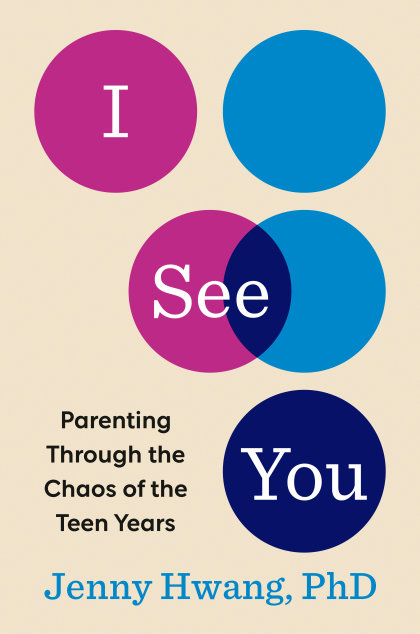
I See You
I See You
Couldn't load pickup availability
Collapsible content
ABOUT
Dr. Jenny Hwang has worked with parents, teens, and young adults for more than twenty years and is a parent to a teen and a young adult herself. What she’s learned for sure is that no matter the careful groundwork or diligent homework a parent has done, connection changes radically at adolescence—sometimes abruptly and almost always via miscommunication, hostility, and a stinging woundedness all around.
But the push to the deeper, more mature connection that parents crave happens when we embrace the opportunity that disconnection can deliver. In other words, when parents weather the teenager transition by setting aside expectations and assumptions to nurture a fresh relationship with the separate self the teen is becoming. Parents build this relationship when they champion the teen’s pull for autonomy by having faith in them, by trusting in their ability to learn through failure, and by not micromanaging and nagging even though we know they might screw up.
A crucial and surprising space opens when parents are able to take this kind of leap, slow down, and open their family dynamic anew: Usually we discover that our child's adolescence is stirring up old wounds and unhealed emotions in us. By working on ourselves in that new space—instead of on our teen—we don't remove ourselves emotionally from our children's lives, but map new paths to bring our whole self into the picture as a vital resource and trusted confidant for our young adult.
We can’t just stifle our emotions and sacrifice our well-being in the name of family—most especially during the teen years. Parents need to work with the teens' motivations for autonomy to help their entire family unit grow into the next chapter of maturity. In I See You, Dr. Hwang shows us the underlying behavioral psychology to support this refreshing, bold, empowering strategy, and brings us advice from the trenches on how to put these tactics into practice.
STANDARD, PRIMARY, DM AND VARIANT COVERS
Standard and Primary covers are widely available through general retailers. They often have higher print runs and can be cheaper, especially during sales.
In contrast, Direct Market (DM) and variant covers are primarily sold in comic shops. DM editions tend to have more limited availability and may be more valuable to collectors.
The main differences lie in artwork style, availability, price, and collector appeal. Ultimately, the choice between standard and variant covers depends on personal preference, budget, and individual collecting goals.
PRODUCT TYPES
Comic book enthusiasts have various formats to choose from when collecting their favorite stories.
Here's a brief overview of the main types:
Omnibus
- Large, hardcover collections
- Usually contain complete runs or extensive story arcs
- Typically 800-1000+ pages
- Higher price point, often €100-€150
Oversized Hardcover (OHC)
- Similar dimensions to omnibus, but thinner
- Collect shorter runs or story arcs
- Usually 300-600 pages
- Priced between €30-€50
Hardcover (HC)
- Standard-sized hardcover books
- Collect 6-12 issues typically
- Similar dimensions to single issues, but with a hard cover
- Priced around €25-€35
Trade Paperback (TP)
- Softcover collections
- Standard comic book size
- Usually collect 4-6 issues
- Most affordable option, typically €15-€25
Other Formats
- Absolute Editions: Oversized, deluxe hardcovers (mainly DC Comics)
- Compendiums: Massive paperback collections
- Graphic Novels (OGN/GN): Original stories not previously released as single issues
The choice between these formats often depends on personal preference, budget, and collecting goals. Omnibus and OHC editions offer larger artwork and more content but at a higher price, while TPs provide a more affordable way to collect complete story arcs