

Random House Publishing Group
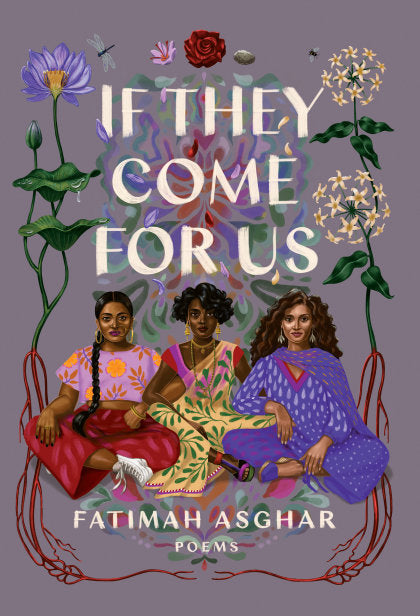
If They Come for Us
If They Come for Us
Couldn't load pickup availability
Collapsible content
ABOUT
“Elegant and playful . . . The poet invents new forms and updates classic ones.”—Elle
“[Fatimah] Asghar interrogates divisions along lines of nationality, age, and gender, illuminating the forces by which identity is fixed or flexible.”—The New Yorker
NAMED ONE OF THE TOP TEN BOOKS OF THE YEAR BY THE NEW YORK PUBLIC LIBRARY • FINALIST FOR THE LAMBDA LITERARY AWARD
an aunt teaches me how to tell
an edible flower
from a poisonous one.
just in case, I hear her say, just in case.
From a co-creator of the Emmy-nominated web series Brown Girls comes an imaginative, soulful debut poetry that collection captures the experiences of being a young Pakistani Muslim woman in contemporary America. Orphaned as a child, Fatimah Asghar grapples with coming of age and navigating questions of sexuality and race without the guidance of a mother or father. These poems at once bear anguish, joy, vulnerability, and compassion, while also exploring the many facets of violence: how it persists within us, how it is inherited across generations, and how it manifests itself in our relationships. In experimental forms and language both lyrical and raw, Asghar seamlessly braids together marginalized people’s histories with her own understanding of identity, place, and belonging.
Praise for If They Come for Us
“In forms both traditional . . . and unorthodox . . . Asghar interrogates divisions along lines of nationality, age, and gender, illuminating the forces by which identity is fixed or flexible. Most vivid and revelatory are pieces such as ‘Boy,’ whose perspicacious turns and irreverent idiom conjure the rich, jagged textures of a childhood shadowed by loss.”—The New Yorker
“[Asghar’s] debut poetry collection cemented her status as one of the city’s greatest present-day poets. . . . A stunning work of art that tackles place, race, sexuality and violence. These poems—both personal and historical, both celebratory and aggrieved—are unquestionably powerful in a way that would doubtless make both Gwendolyn Brooks and Harriet Monroe proud.”—Chicago Review of Books
“Taut lines, vivid language, and searing images range cover to cover. . . . Inventive, sad, gripping, and beautiful.”—Library Journal (starred review)
STANDARD, PRIMARY, DM AND VARIANT COVERS
Standard and Primary covers are widely available through general retailers. They often have higher print runs and can be cheaper, especially during sales.
In contrast, Direct Market (DM) and variant covers are primarily sold in comic shops. DM editions tend to have more limited availability and may be more valuable to collectors.
The main differences lie in artwork style, availability, price, and collector appeal. Ultimately, the choice between standard and variant covers depends on personal preference, budget, and individual collecting goals.
PRODUCT TYPES
Comic book enthusiasts have various formats to choose from when collecting their favorite stories.
Here's a brief overview of the main types:
Omnibus
- Large, hardcover collections
- Usually contain complete runs or extensive story arcs
- Typically 800-1000+ pages
- Higher price point, often €100-€150
Oversized Hardcover (OHC)
- Similar dimensions to omnibus, but thinner
- Collect shorter runs or story arcs
- Usually 300-600 pages
- Priced between €30-€50
Hardcover (HC)
- Standard-sized hardcover books
- Collect 6-12 issues typically
- Similar dimensions to single issues, but with a hard cover
- Priced around €25-€35
Trade Paperback (TP)
- Softcover collections
- Standard comic book size
- Usually collect 4-6 issues
- Most affordable option, typically €15-€25
Other Formats
- Absolute Editions: Oversized, deluxe hardcovers (mainly DC Comics)
- Compendiums: Massive paperback collections
- Graphic Novels (OGN/GN): Original stories not previously released as single issues
The choice between these formats often depends on personal preference, budget, and collecting goals. Omnibus and OHC editions offer larger artwork and more content but at a higher price, while TPs provide a more affordable way to collect complete story arcs