

Penguin Publishing Group
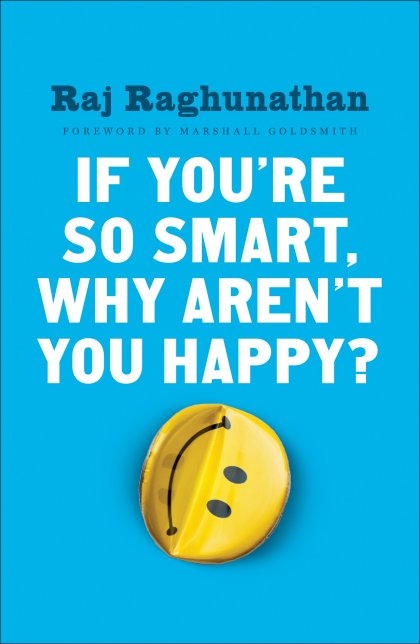
If You're So Smart, Why Aren't You Happy?
If You're So Smart, Why Aren't You Happy?
Couldn't load pickup availability
Collapsible content
ABOUT
The first book by the creator of COURSERA®'s most popular online course in 2015, "A Life of Happiness and Fulfillment"
Could the same traits that drive your career success also be keeping you from being happier?
Fifteen years after getting his MBA, Raj Raghunathan spent some time with his old classmates. He noticed that though they’d all done well, there didn’t appear to be much correlation between their academic success and career success. What Raj found even more curious was the even smaller correlation between career success and what he calls life success. The greater the career success, the more unhappy, out of shape, harried and distracted his friends were.
If intelligence helps with decision-making, smart people should naturally make better life choices. So why are so many of the smartest, brightest, most successful people profoundly unhappy? Raj set out to find an answer to this problem, and extensively researched happiness not just of students and business people, but also stay-at-home-parents, lawyers, and artists, among others.
If You’re So Smart, Why Aren’t You Happy? takes readers on a fun and meaningful tour of the best research available on how some of the very determinants of success may also come to deflate happiness. Raghunathan explores the seven most common inclinations that successful people need to overcome, and the seven habits they should adopt instead. Among his surprising findings...
·The correlation between wealth and happiness is much smaller than you'd expect it to be
·Generosity is not only a key to happiness, but a determining factor of long term success
·Appreciating uncertainty, rather than seeking full control of outcomes, is necessary for happiness
If You’re So Smart, Why Aren’t You Happy? will give you a powerful new perspective on your work, personal goals and relationships, whether you’re already successful or just starting out.
STANDARD, PRIMARY, DM AND VARIANT COVERS
Standard and Primary covers are widely available through general retailers. They often have higher print runs and can be cheaper, especially during sales.
In contrast, Direct Market (DM) and variant covers are primarily sold in comic shops. DM editions tend to have more limited availability and may be more valuable to collectors.
The main differences lie in artwork style, availability, price, and collector appeal. Ultimately, the choice between standard and variant covers depends on personal preference, budget, and individual collecting goals.
PRODUCT TYPES
Comic book enthusiasts have various formats to choose from when collecting their favorite stories.
Here's a brief overview of the main types:
Omnibus
- Large, hardcover collections
- Usually contain complete runs or extensive story arcs
- Typically 800-1000+ pages
- Higher price point, often €100-€150
Oversized Hardcover (OHC)
- Similar dimensions to omnibus, but thinner
- Collect shorter runs or story arcs
- Usually 300-600 pages
- Priced between €30-€50
Hardcover (HC)
- Standard-sized hardcover books
- Collect 6-12 issues typically
- Similar dimensions to single issues, but with a hard cover
- Priced around €25-€35
Trade Paperback (TP)
- Softcover collections
- Standard comic book size
- Usually collect 4-6 issues
- Most affordable option, typically €15-€25
Other Formats
- Absolute Editions: Oversized, deluxe hardcovers (mainly DC Comics)
- Compendiums: Massive paperback collections
- Graphic Novels (OGN/GN): Original stories not previously released as single issues
The choice between these formats often depends on personal preference, budget, and collecting goals. Omnibus and OHC editions offer larger artwork and more content but at a higher price, while TPs provide a more affordable way to collect complete story arcs