

Library of America
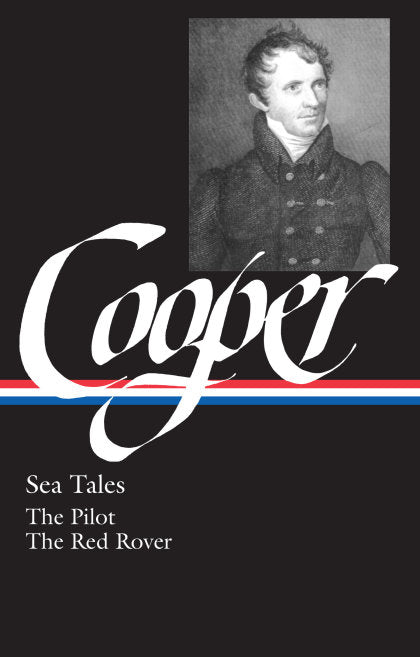
James Fenimore Cooper: Sea Tales (LOA #54)
James Fenimore Cooper: Sea Tales (LOA #54)
Couldn't load pickup availability
Collapsible content
ABOUT
Cooper drew on his direct knowledge of ships and sailors to present a truer picture of life on the sea than had ever before achieved in literature. As a boy of seventeen he had sailed before the mast on a merchantman bound from New York to London and then to Spain. On board he experienced the life of a common seaman, learned the craft of sailing, encountered terrifying storms, was chased by pirates, and watched the impressment of crew members by a British man-of-war. He later served as an officer in the United States Navy.
The Pilot is loosely based upon stories of John Paul Jones’s daring hit-and-run tactics during the Revolutionary War. The shadowy hero, modeled on Jones, leads a squadron of the infant American navy in a series of raids on the English coast, braving fierce storms and the guns of hostile warships, yet never revealing his identity. In this novel Cooper introduced the character of the “old salt,” the seasoned deckhand happy only aboard ship. Long Tom Coffin, with his briny conversation and shrewd nautical advice, is the first of Cooper’s memorable portraits of common seaman.
A ghostly ship, an uncanny hero, a heroine kidnapped by pirates, revelations of mistaken identity, and the reunion of long-lost relatives—scenes of romance and adventure fill the pages of The Red Rover, Cooper’s most theatrical novel. Set in the mid-eighteenth century, the tale recounts the exploits of a noble outcast and visionary who foresees America’s destiny as a sovereign nation. Forced into a life of piracy, the Rover conducts his private war of independence in a story that equates the free and daring life with the American dream of self-reliance and liberty from British rule.
LIBRARY OF AMERICA is an independent nonprofit cultural organization founded in 1979 to preserve our nation’s literary heritage by publishing, and keeping permanently in print, America’s best and most significant writing. The Library of America series includes more than 300 volumes to date, authoritative editions that average 1,000 pages in length, feature cloth covers, sewn bindings, and ribbon markers, and are printed on premium acid-free paper that will last for centuries.
STANDARD, PRIMARY, DM AND VARIANT COVERS
Standard and Primary covers are widely available through general retailers. They often have higher print runs and can be cheaper, especially during sales.
In contrast, Direct Market (DM) and variant covers are primarily sold in comic shops. DM editions tend to have more limited availability and may be more valuable to collectors.
The main differences lie in artwork style, availability, price, and collector appeal. Ultimately, the choice between standard and variant covers depends on personal preference, budget, and individual collecting goals.
PRODUCT TYPES
Comic book enthusiasts have various formats to choose from when collecting their favorite stories.
Here's a brief overview of the main types:
Omnibus
- Large, hardcover collections
- Usually contain complete runs or extensive story arcs
- Typically 800-1000+ pages
- Higher price point, often €100-€150
Oversized Hardcover (OHC)
- Similar dimensions to omnibus, but thinner
- Collect shorter runs or story arcs
- Usually 300-600 pages
- Priced between €30-€50
Hardcover (HC)
- Standard-sized hardcover books
- Collect 6-12 issues typically
- Similar dimensions to single issues, but with a hard cover
- Priced around €25-€35
Trade Paperback (TP)
- Softcover collections
- Standard comic book size
- Usually collect 4-6 issues
- Most affordable option, typically €15-€25
Other Formats
- Absolute Editions: Oversized, deluxe hardcovers (mainly DC Comics)
- Compendiums: Massive paperback collections
- Graphic Novels (OGN/GN): Original stories not previously released as single issues
The choice between these formats often depends on personal preference, budget, and collecting goals. Omnibus and OHC editions offer larger artwork and more content but at a higher price, while TPs provide a more affordable way to collect complete story arcs