

Knopf Doubleday Publishing Group
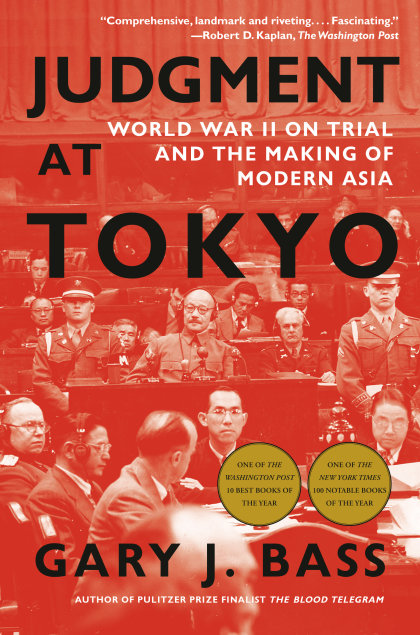
Judgment at Tokyo
Judgment at Tokyo
Couldn't load pickup availability
Collapsible content
ABOUT
“Nothing less than a masterpiece. With epic research and mesmerizing narrative power, Judgment at Tokyo has the makings of an instant classic.”
—Evan Osnos, National Book Award–winning author of Age of Ambition: Chasing Fortune, Truth, and Faith in the New China
In the weeks after Japan finally surrendered to the Allies to end World War II, the world turned to the question of how to move on from years of carnage and destruction. For Harry Truman, Douglas MacArthur, Chiang Kai-shek, and their fellow victors, the question of justice seemed clear: Japan’s militaristic leaders needed to be tried and punished for the surprise attack at Pearl Harbor; shocking atrocities against civilians in China, the Philippines, and elsewhere; and rampant abuses of prisoners of war in notorious incidents such as the Bataan death march. For the Allied powers, the trial was an opportunity to render judgment on their vanquished foes, but also to create a legal framework to prosecute war crimes and prohibit the use of aggressive war, building a more peaceful world under international law and American hegemony. For the Japanese leaders on trial, it was their chance to argue that their war had been waged to liberate Asia from Western imperialism and that the court was victors’ justice.
For more than two years, lawyers for both sides presented their cases before a panel of clashing judges from China, India, the Philippines, and Australia, as well as the United States and European powers. The testimony ran from horrific accounts of brutality and the secret plans to attack Pearl Harbor to the Japanese military’s threats to subvert the government if it sued for peace. Yet rather than clarity and unanimity, the trial brought complexity, dissents, and divisions that provoke international discord between China, Japan, and Korea to this day. Those courtroom tensions and contradictions could also be seen playing out across Asia as the trial unfolded in the crucial early years of the Cold War, from China’s descent into civil war to Japan’s successful postwar democratic elections to India’s independence and partition.
From the author of the acclaimed The Blood Telegram, which was a Pulitzer Prize finalist, this magnificent history is the product of a decade of research and writing. Judgment at Tokyo is a riveting story of wartime action, dramatic courtroom battles, and the epic formative years that set the stage for the Asian postwar era.
STANDARD, PRIMARY, DM AND VARIANT COVERS
Standard and Primary covers are widely available through general retailers. They often have higher print runs and can be cheaper, especially during sales.
In contrast, Direct Market (DM) and variant covers are primarily sold in comic shops. DM editions tend to have more limited availability and may be more valuable to collectors.
The main differences lie in artwork style, availability, price, and collector appeal. Ultimately, the choice between standard and variant covers depends on personal preference, budget, and individual collecting goals.
PRODUCT TYPES
Comic book enthusiasts have various formats to choose from when collecting their favorite stories.
Here's a brief overview of the main types:
Omnibus
- Large, hardcover collections
- Usually contain complete runs or extensive story arcs
- Typically 800-1000+ pages
- Higher price point, often €100-€150
Oversized Hardcover (OHC)
- Similar dimensions to omnibus, but thinner
- Collect shorter runs or story arcs
- Usually 300-600 pages
- Priced between €30-€50
Hardcover (HC)
- Standard-sized hardcover books
- Collect 6-12 issues typically
- Similar dimensions to single issues, but with a hard cover
- Priced around €25-€35
Trade Paperback (TP)
- Softcover collections
- Standard comic book size
- Usually collect 4-6 issues
- Most affordable option, typically €15-€25
Other Formats
- Absolute Editions: Oversized, deluxe hardcovers (mainly DC Comics)
- Compendiums: Massive paperback collections
- Graphic Novels (OGN/GN): Original stories not previously released as single issues
The choice between these formats often depends on personal preference, budget, and collecting goals. Omnibus and OHC editions offer larger artwork and more content but at a higher price, while TPs provide a more affordable way to collect complete story arcs