

Random House Publishing Group
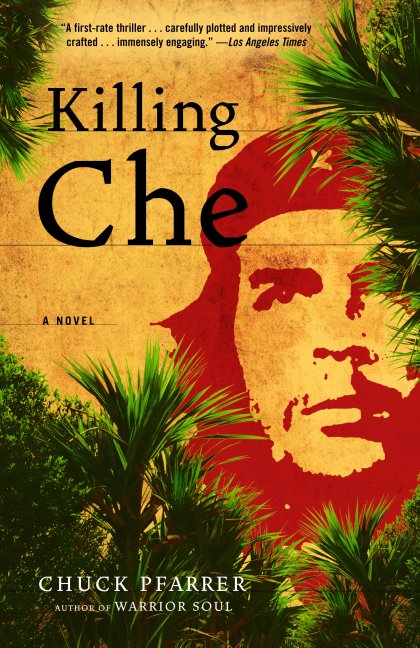
Killing Che
Killing Che
Couldn't load pickup availability
Collapsible content
ABOUT
The year is 1967. Paul Hoyle, a CIA paramilitary officer, has resigned from the agency an incident in Laos that left one man dead and Hoyle’s face scarred by gunshot. But Hoyle is soon drawn back into the agency’s fold, finding himself a “fallen angel,” an independent contractor the U.S. secretly sends to global hot spots.
Bolivia, the poorest country in the Western Hemisphere, is a nation ripe for Communist infiltration and revolution. So the stage is set for a duel between world ideologies, with players from Washington to Moscow to Havana. After a Bolivian army unit is disastrously ambushed, Hoyle is dispatched to South America by a CIA concerned that another Vietnam may be in the works. With Cuban-sponsored guerrillas afoot and a corrupt Bolivian military opposing them, Hoyle finds the jungle a treacherous place where honor and morality are surrendered to the basic business of survival.
Though Che Guevara, the charismatic revolutionary who helped Castro take hold in Cuba, is believed to have been killed in the Congo–or executed by Fidel himself–a rucksack recovered after a deadly gunfight suggests that the Marxist rebel may be heading up this new, highly effective insurgency.
World-weary Hoyle draws ever nearer to the passionate revolutionary, as a struggle between worldviews is fought with automatic weapons in steamy jungles, veiled threats in government offices, and even exchanged secrets in hotel bedrooms–for at the center of this intense cat-and-mouse game are two captivating women who may hold the keys to these men’s destinies. Tania Vünke is Guevara’s crucial undercover operative and occasional lover, a conflicted woman with secrets entrusted to her by Guevara himself. And beautiful Maria Agular is the elegant mistress of the Bolivian minister of information, a tormented soul whom Hoyle dares to trust with both information and his heart.
Terrorism expert Chuck Pfarrer packs this electrifying plot with insider knowledge of intelligence tradecraft. Populated with powerfully drawn characters, Killing Che is a stunning re-creation of a conflict that sealed the fate of one of the twentieth century’s most controversial and complex political figures–a man whose renown continues to grow decades after his violent end.
STANDARD, PRIMARY, DM AND VARIANT COVERS
Standard and Primary covers are widely available through general retailers. They often have higher print runs and can be cheaper, especially during sales.
In contrast, Direct Market (DM) and variant covers are primarily sold in comic shops. DM editions tend to have more limited availability and may be more valuable to collectors.
The main differences lie in artwork style, availability, price, and collector appeal. Ultimately, the choice between standard and variant covers depends on personal preference, budget, and individual collecting goals.
PRODUCT TYPES
Comic book enthusiasts have various formats to choose from when collecting their favorite stories.
Here's a brief overview of the main types:
Omnibus
- Large, hardcover collections
- Usually contain complete runs or extensive story arcs
- Typically 800-1000+ pages
- Higher price point, often €100-€150
Oversized Hardcover (OHC)
- Similar dimensions to omnibus, but thinner
- Collect shorter runs or story arcs
- Usually 300-600 pages
- Priced between €30-€50
Hardcover (HC)
- Standard-sized hardcover books
- Collect 6-12 issues typically
- Similar dimensions to single issues, but with a hard cover
- Priced around €25-€35
Trade Paperback (TP)
- Softcover collections
- Standard comic book size
- Usually collect 4-6 issues
- Most affordable option, typically €15-€25
Other Formats
- Absolute Editions: Oversized, deluxe hardcovers (mainly DC Comics)
- Compendiums: Massive paperback collections
- Graphic Novels (OGN/GN): Original stories not previously released as single issues
The choice between these formats often depends on personal preference, budget, and collecting goals. Omnibus and OHC editions offer larger artwork and more content but at a higher price, while TPs provide a more affordable way to collect complete story arcs