

Crown
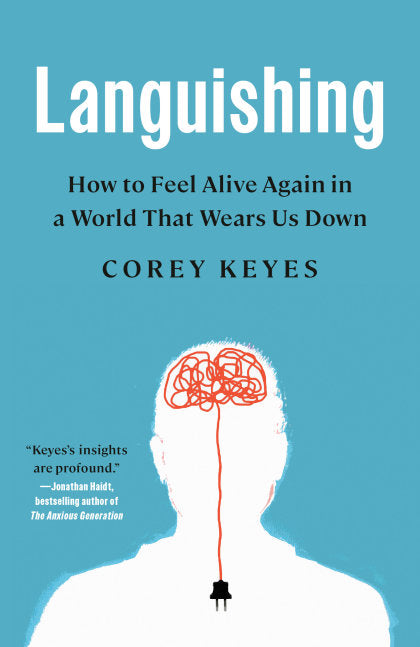
Languishing
Languishing
Couldn't load pickup availability
Collapsible content
ABOUT
If you’re muddling through the day in a fog, often forgetting why you walked into a room . . .
If you feel emotionally flattened, lacking the energy to socialize or feel joy in the small things . . .
If you feel an inner void—like something is missing, but you aren’t sure what . . .
Then this book is for you.
Languishing—the state of mental weariness that erodes our self-esteem, motivation, and sense of meaning—can be easy to brush off as the new normal, especially since indifference is one of its symptoms. It is not a synonym for depression and its attendant state of prolonged sadness. Languishers are more likely to feel out of control of their lives, uncertain about what they want from the future, and paralyzed when faced with decisions. Left unchecked, languishing not only impedes our daily functioning but is a gateway to serious mental illness and early mortality.
Emory University sociologist Corey Keyes has spent his career studying the causes and costs of languishing—the neglected middle child of mental health. Now Keyes has written the first definitive book on the subject, examining the ripple effect of languishing on our lives before deftly diagnosing the larger forces behind its rise: the false promises of the self-help industrial complex, a global moment of intense fear and loss, and a failing healthcare system focused on treating rather than preventing illness.
Ultimately, Keyes presents a counterintuitive approach to breaking the cycles keeping us stuck and finding a path to true flourishing. Unlike self-improvement systems offering quick-fix mood boosts, his framework focuses on functioning well: taking simple but powerful steps to hold our emotions loosely, becoming more accepting of ourselves and others, and carving out daily moments for the activities that create cycles of meaning, connection, and personal growth.
Languishing is a must-read for anyone tempted to downplay feelings of demotivation and emptiness as they struggle to haul themselves through the day, and for those eager to build a higher tolerance for adversity and the pressures of modern life. We can expand our vocabulary for describing our inner experiences and deepest needs—and, with it, our potential to flourish.
STANDARD, PRIMARY, DM AND VARIANT COVERS
Standard and Primary covers are widely available through general retailers. They often have higher print runs and can be cheaper, especially during sales.
In contrast, Direct Market (DM) and variant covers are primarily sold in comic shops. DM editions tend to have more limited availability and may be more valuable to collectors.
The main differences lie in artwork style, availability, price, and collector appeal. Ultimately, the choice between standard and variant covers depends on personal preference, budget, and individual collecting goals.
PRODUCT TYPES
Comic book enthusiasts have various formats to choose from when collecting their favorite stories.
Here's a brief overview of the main types:
Omnibus
- Large, hardcover collections
- Usually contain complete runs or extensive story arcs
- Typically 800-1000+ pages
- Higher price point, often €100-€150
Oversized Hardcover (OHC)
- Similar dimensions to omnibus, but thinner
- Collect shorter runs or story arcs
- Usually 300-600 pages
- Priced between €30-€50
Hardcover (HC)
- Standard-sized hardcover books
- Collect 6-12 issues typically
- Similar dimensions to single issues, but with a hard cover
- Priced around €25-€35
Trade Paperback (TP)
- Softcover collections
- Standard comic book size
- Usually collect 4-6 issues
- Most affordable option, typically €15-€25
Other Formats
- Absolute Editions: Oversized, deluxe hardcovers (mainly DC Comics)
- Compendiums: Massive paperback collections
- Graphic Novels (OGN/GN): Original stories not previously released as single issues
The choice between these formats often depends on personal preference, budget, and collecting goals. Omnibus and OHC editions offer larger artwork and more content but at a higher price, while TPs provide a more affordable way to collect complete story arcs