

Berrett-Koehler Publishers
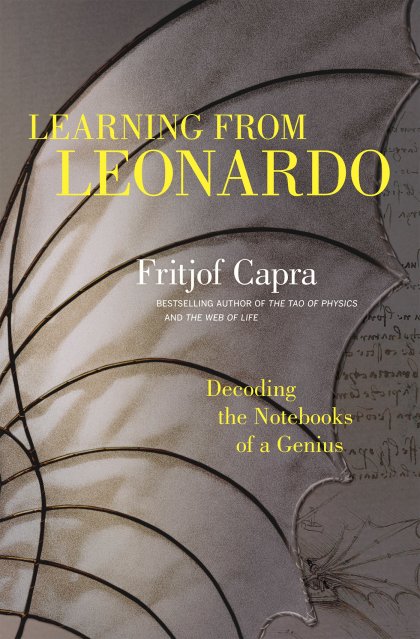
Learning from Leonardo
Learning from Leonardo
Couldn't load pickup availability
Collapsible content
ABOUT
Leonardo da Vinci was a brilliant artist, scientist, engineer, mathematician, architect, and inventor. But he was also, Fritjof Capra argues, a profoundly modern man. Capra’s decade-long study of Leonardo’s fabled notebooks reveal him as a “systems thinker” centuries before the term was coined. Leonardo believed the key to understanding the world was in perceiving the connections between phenomena and the larger patterns formed by those relationships.
Seeing the world as a dynamic, integrated whole, Leonardo often used concepts from one area to illuminate problems in another. For example, his studies of the movement of water informed his ideas about how landscapes are shaped, how sap rises in plants, how air moves over a bird’s wing, and how blood flows in the human body. His observations of nature enhanced his art, his drawings were integral to his scientific studies and architectural designs.
Capra describes seven defining characteristics of Leonardo da Vinci’s genius and includes a list of over forty discoveries Leonardo made that weren’t rediscovered until centuries later. His overview of Leonardo’s thought follows the organizational scheme Leonardo himself intended to use if he ever published his notebooks. So in a sense, this is Leonardo’s science as he himself would have presented it.
STANDARD, PRIMARY, DM AND VARIANT COVERS
Standard and Primary covers are widely available through general retailers. They often have higher print runs and can be cheaper, especially during sales.
In contrast, Direct Market (DM) and variant covers are primarily sold in comic shops. DM editions tend to have more limited availability and may be more valuable to collectors.
The main differences lie in artwork style, availability, price, and collector appeal. Ultimately, the choice between standard and variant covers depends on personal preference, budget, and individual collecting goals.
PRODUCT TYPES
Comic book enthusiasts have various formats to choose from when collecting their favorite stories.
Here's a brief overview of the main types:
Omnibus
- Large, hardcover collections
- Usually contain complete runs or extensive story arcs
- Typically 800-1000+ pages
- Higher price point, often €100-€150
Oversized Hardcover (OHC)
- Similar dimensions to omnibus, but thinner
- Collect shorter runs or story arcs
- Usually 300-600 pages
- Priced between €30-€50
Hardcover (HC)
- Standard-sized hardcover books
- Collect 6-12 issues typically
- Similar dimensions to single issues, but with a hard cover
- Priced around €25-€35
Trade Paperback (TP)
- Softcover collections
- Standard comic book size
- Usually collect 4-6 issues
- Most affordable option, typically €15-€25
Other Formats
- Absolute Editions: Oversized, deluxe hardcovers (mainly DC Comics)
- Compendiums: Massive paperback collections
- Graphic Novels (OGN/GN): Original stories not previously released as single issues
The choice between these formats often depends on personal preference, budget, and collecting goals. Omnibus and OHC editions offer larger artwork and more content but at a higher price, while TPs provide a more affordable way to collect complete story arcs