

Beacon Press
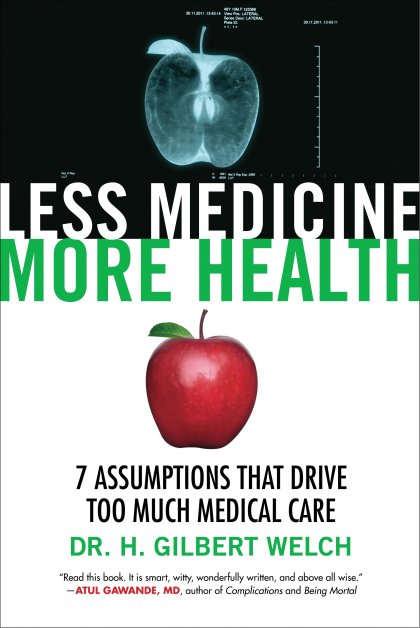
Less Medicine, More Health
Less Medicine, More Health
Couldn't load pickup availability
Collapsible content
ABOUT
You might think the biggest problem in medical care is that it costs too much. Or that health insurance is too expensive, too uneven, too complicated—and gives you too many forms to fill out. But the central problem is that too much medical care has too little value.
Dr. H. Gilbert Welch is worried about too much medical care. He doesn’t deny that some people get too little medical care—rather that the conventional concern about “too little” needs to be balanced with a concern about “too much”: too many people being made to worry about diseases they don’t have and are at only average risk to get; too many people being tested and exposed to the harmful effects of the testing process; too many people being subjected to treatments they don’t need or can’t benefit from. The American public has been sold the idea that seeking medical care is one of the most important steps to maintain wellness. Surprisingly, medical care is not, in fact, well correlated with good health. More medicine does not equal more health; in reality the opposite may be true.
In Less Medicine, More Health, Dr. Welch pushes against established wisdom and suggests that medical care can be too aggressive. Drawing on his twenty-five years of medical practice and research, he notes that while economics and lawyers contribute to the excesses of American medicine, the problem is essentially created when the general public clings to these powerful assumptions about the value of tests and treatments—a number of which are just plain wrong.
By telling fascinating (and occasionally amusing) stories backed by reliable data, Dr. Welch challenges patients and the health-care establishment to rethink some very fundamental practices. His provocative prescriptions hold the potential to save money and, more important, improve health outcomes for us all.
STANDARD, PRIMARY, DM AND VARIANT COVERS
Standard and Primary covers are widely available through general retailers. They often have higher print runs and can be cheaper, especially during sales.
In contrast, Direct Market (DM) and variant covers are primarily sold in comic shops. DM editions tend to have more limited availability and may be more valuable to collectors.
The main differences lie in artwork style, availability, price, and collector appeal. Ultimately, the choice between standard and variant covers depends on personal preference, budget, and individual collecting goals.
PRODUCT TYPES
Comic book enthusiasts have various formats to choose from when collecting their favorite stories.
Here's a brief overview of the main types:
Omnibus
- Large, hardcover collections
- Usually contain complete runs or extensive story arcs
- Typically 800-1000+ pages
- Higher price point, often €100-€150
Oversized Hardcover (OHC)
- Similar dimensions to omnibus, but thinner
- Collect shorter runs or story arcs
- Usually 300-600 pages
- Priced between €30-€50
Hardcover (HC)
- Standard-sized hardcover books
- Collect 6-12 issues typically
- Similar dimensions to single issues, but with a hard cover
- Priced around €25-€35
Trade Paperback (TP)
- Softcover collections
- Standard comic book size
- Usually collect 4-6 issues
- Most affordable option, typically €15-€25
Other Formats
- Absolute Editions: Oversized, deluxe hardcovers (mainly DC Comics)
- Compendiums: Massive paperback collections
- Graphic Novels (OGN/GN): Original stories not previously released as single issues
The choice between these formats often depends on personal preference, budget, and collecting goals. Omnibus and OHC editions offer larger artwork and more content but at a higher price, while TPs provide a more affordable way to collect complete story arcs