

Library of America
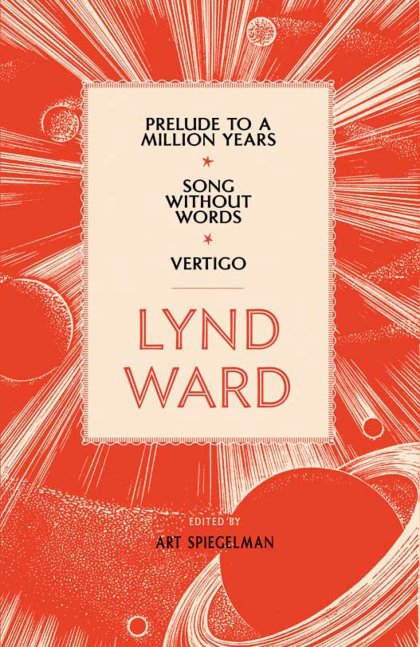
Lynd Ward: Prelude to a Million Years, Song Without Words, Vertigo (LOA #211)
Lynd Ward: Prelude to a Million Years, Song Without Words, Vertigo (LOA #211)
Couldn't load pickup availability
Collapsible content
ABOUT
In this, the second of two volumes collecting all his woodcut novels, The Library of America brings together Lynd Ward’s three later books, two of them brief, the visual equivalent of chamber music, the other his longest, a symphony in three movements. Prelude to a Million Years (1933) is a dark meditation on art, inspiration, and the disparity between the ideal and the real. Song Without Words (1936), a protest against the rise of European fascism, asks if ours is a world still fit for the human soul. Vertigo (1937), Ward’s undisputed masterpiece, is an epic novel on the theme of the individual caught in the downward spiral of a sinking American economy. Its characters include a young violinist, her luckless fiancé, and an elderly business magnate who—movingly, and without ever becoming a political caricature—embodies the social forces determining their fate.
The images reproduced in this volume are taken from prints pulled from the original woodblocks or first-generation electrotypes. Ward’s novels are presented, for the first time since the 1930s, in the format that the artist intended, one image per right-hand page, and are followed by four essays in which he discusses the technical challenges of his craft. Art Spiegelman contributes an introductory essay, “Reading Pictures,” that defines Ward’s towering achievement in that most demanding of graphic-story forms, the wordless novel in woodcuts.
STANDARD, PRIMARY, DM AND VARIANT COVERS
Standard and Primary covers are widely available through general retailers. They often have higher print runs and can be cheaper, especially during sales.
In contrast, Direct Market (DM) and variant covers are primarily sold in comic shops. DM editions tend to have more limited availability and may be more valuable to collectors.
The main differences lie in artwork style, availability, price, and collector appeal. Ultimately, the choice between standard and variant covers depends on personal preference, budget, and individual collecting goals.
PRODUCT TYPES
Comic book enthusiasts have various formats to choose from when collecting their favorite stories.
Here's a brief overview of the main types:
Omnibus
- Large, hardcover collections
- Usually contain complete runs or extensive story arcs
- Typically 800-1000+ pages
- Higher price point, often €100-€150
Oversized Hardcover (OHC)
- Similar dimensions to omnibus, but thinner
- Collect shorter runs or story arcs
- Usually 300-600 pages
- Priced between €30-€50
Hardcover (HC)
- Standard-sized hardcover books
- Collect 6-12 issues typically
- Similar dimensions to single issues, but with a hard cover
- Priced around €25-€35
Trade Paperback (TP)
- Softcover collections
- Standard comic book size
- Usually collect 4-6 issues
- Most affordable option, typically €15-€25
Other Formats
- Absolute Editions: Oversized, deluxe hardcovers (mainly DC Comics)
- Compendiums: Massive paperback collections
- Graphic Novels (OGN/GN): Original stories not previously released as single issues
The choice between these formats often depends on personal preference, budget, and collecting goals. Omnibus and OHC editions offer larger artwork and more content but at a higher price, while TPs provide a more affordable way to collect complete story arcs