

Random House Publishing Group
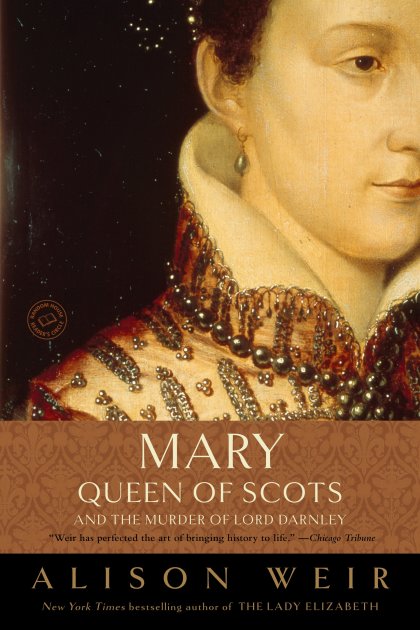
Mary, Queen of Scots, and the Murder of Lord Darnley
Mary, Queen of Scots, and the Murder of Lord Darnley
Couldn't load pickup availability
Collapsible content
ABOUT
“All the elements of a juicy murder mystery are within these pages.”—Fort Worth Star-Telegram
“As dramatic as witnessing firsthand the most riveting court case.”—Booklist, starred review
Tall, handsome, accomplished, and charming, Henry Stuart, Lord Darnley, had it all, including a strong claim to the English throne, a fact that threatened the already insecure Elizabeth I. She therefore opposed any plan for Darnley to marry her cousin, Mary, Queen of Scots, who herself claimed to be Queen of England. But in 1565 Mary met and fell in love with Darnley—and defied Elizabeth by marrying him. It was not long before she discovered that her new husband was weak and vicious, and interested only in securing sovereign power for himself.
Then, on February 10, 1567, an explosion at his lodgings left Darnley dead; the intrigue thickened after it was discovered that he had apparently been suffocated before the blast. The murder of Darnley ultimately led to Mary’s ruin. After her deposition, there conveniently came to light a box of documents—the notorious Casket Letters—that her enemies claimed were proof of her guilt. But Mary was never allowed to see them, and they disappeared in 1584. The question of their authenticity has haunted historians ever since.
After exhaustive reexamination and reevaluation of the source material, Alison Weir has come up with a solution to this enduring mystery that shatters many of the misconceptions about Mary, Queen of Scots. Complete with bright writing and stunning characterizations, Mary, Queen of Scots, and the Murder of Lord Darnley is an engaging excursion into Britain’s bloodstained, power-obsessed past.
STANDARD, PRIMARY, DM AND VARIANT COVERS
Standard and Primary covers are widely available through general retailers. They often have higher print runs and can be cheaper, especially during sales.
In contrast, Direct Market (DM) and variant covers are primarily sold in comic shops. DM editions tend to have more limited availability and may be more valuable to collectors.
The main differences lie in artwork style, availability, price, and collector appeal. Ultimately, the choice between standard and variant covers depends on personal preference, budget, and individual collecting goals.
PRODUCT TYPES
Comic book enthusiasts have various formats to choose from when collecting their favorite stories.
Here's a brief overview of the main types:
Omnibus
- Large, hardcover collections
- Usually contain complete runs or extensive story arcs
- Typically 800-1000+ pages
- Higher price point, often €100-€150
Oversized Hardcover (OHC)
- Similar dimensions to omnibus, but thinner
- Collect shorter runs or story arcs
- Usually 300-600 pages
- Priced between €30-€50
Hardcover (HC)
- Standard-sized hardcover books
- Collect 6-12 issues typically
- Similar dimensions to single issues, but with a hard cover
- Priced around €25-€35
Trade Paperback (TP)
- Softcover collections
- Standard comic book size
- Usually collect 4-6 issues
- Most affordable option, typically €15-€25
Other Formats
- Absolute Editions: Oversized, deluxe hardcovers (mainly DC Comics)
- Compendiums: Massive paperback collections
- Graphic Novels (OGN/GN): Original stories not previously released as single issues
The choice between these formats often depends on personal preference, budget, and collecting goals. Omnibus and OHC editions offer larger artwork and more content but at a higher price, while TPs provide a more affordable way to collect complete story arcs