

Penguin Publishing Group
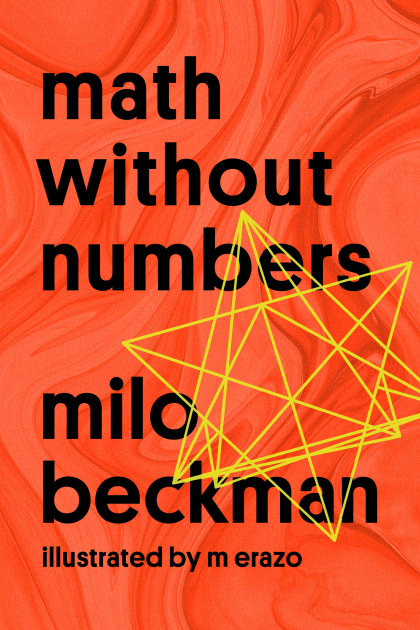
Math Without Numbers
Math Without Numbers
Couldn't load pickup availability
Collapsible content
ABOUT
The only numbers in this book are the page numbers.
Math Without Numbers is a vivid, conversational, and wholly original guide to the three main branches of abstract math—topology, analysis, and algebra—which turn out to be surprisingly easy to grasp. This book upends the conventional approach to math, inviting you to think creatively about shape and dimension, the infinite and infinitesimal, symmetries, proofs, and how these concepts all fit together. What awaits readers is a freewheeling tour of the inimitable joys and unsolved mysteries of this curiously powerful subject.
Like the classic math allegory Flatland, first published over a century ago, or Douglas Hofstadter's Godel, Escher, Bach forty years ago, there has never been a math book quite like Math Without Numbers. So many popularizations of math have dwelt on numbers like pi or zero or infinity. This book goes well beyond to questions such as: How many shapes are there? Is anything bigger than infinity? And is math even true? Milo Beckman shows why math is mostly just pattern recognition and how it keeps on surprising us with unexpected, useful connections to the real world.
The ambitions of this book take a special kind of author. An inventive, original thinker pursuing his calling with jubilant passion. A prodigy. Milo Beckman completed the graduate-level course sequence in mathematics at age sixteen, when he was a sophomore at Harvard; while writing this book, he was studying the philosophical foundations of physics at Columbia under Brian Greene, among others.
STANDARD, PRIMARY, DM AND VARIANT COVERS
Standard and Primary covers are widely available through general retailers. They often have higher print runs and can be cheaper, especially during sales.
In contrast, Direct Market (DM) and variant covers are primarily sold in comic shops. DM editions tend to have more limited availability and may be more valuable to collectors.
The main differences lie in artwork style, availability, price, and collector appeal. Ultimately, the choice between standard and variant covers depends on personal preference, budget, and individual collecting goals.
PRODUCT TYPES
Comic book enthusiasts have various formats to choose from when collecting their favorite stories.
Here's a brief overview of the main types:
Omnibus
- Large, hardcover collections
- Usually contain complete runs or extensive story arcs
- Typically 800-1000+ pages
- Higher price point, often €100-€150
Oversized Hardcover (OHC)
- Similar dimensions to omnibus, but thinner
- Collect shorter runs or story arcs
- Usually 300-600 pages
- Priced between €30-€50
Hardcover (HC)
- Standard-sized hardcover books
- Collect 6-12 issues typically
- Similar dimensions to single issues, but with a hard cover
- Priced around €25-€35
Trade Paperback (TP)
- Softcover collections
- Standard comic book size
- Usually collect 4-6 issues
- Most affordable option, typically €15-€25
Other Formats
- Absolute Editions: Oversized, deluxe hardcovers (mainly DC Comics)
- Compendiums: Massive paperback collections
- Graphic Novels (OGN/GN): Original stories not previously released as single issues
The choice between these formats often depends on personal preference, budget, and collecting goals. Omnibus and OHC editions offer larger artwork and more content but at a higher price, while TPs provide a more affordable way to collect complete story arcs