

Astra Publishing House
Mechanize My Hands to War
Mechanize My Hands to War
Couldn't load pickup availability
Collapsible content
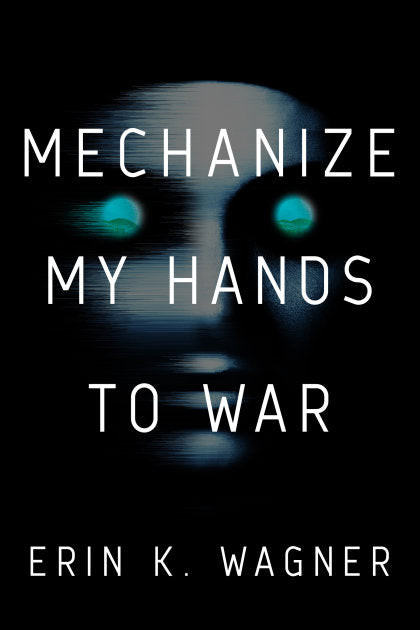
ABOUT
The emergence of artificial life intersects with state violence and political extremism in Erin K. Wagner’s rural Appalachia, where startlingly intimate portraits of survival and empathy bloom against a stark backdrop of loss.
September, 2060: Adrian Hall, acting director of the ATF, is holding a press conference. Yes, Eli Whitaker, anti-android demagogue, remains at large, and yes, he is recruiting children into his militia — Adrian is careful not to use the word army. She is careful all the way through the conference, right up until someone asks her about her personal connection to Whitaker; about Trey Caudill, his foster son.
July, 2058: Farmers Shay and Ernst, struggling after they discover their GMO crop seeds have failed, hire android employees: Sarah as hospice, and AG-15 to work the now-toxic fields. Under one roof, four lives intertwine in ways no one expects.
July, 2060: Special Agent Trey Caudill is leading a raid on Eli Whitaker’s farm when an android, call sign Ora, shoots and kills a child.
March, 2061: Ora sits in a room. He has been there for seven months, resisting diagnostic tests. He is drawing on the walls, scratching his artificial skin, tracing something over and over and over again with a tired metallic finger. There is nothing wrong with his circuitry, so why does Ora feel so broken?
Unflinching yet understated, making expert use of its nonlinear form, Mechanize My Hands to War is at once a study of grief and an ode to the power of self-determination.
STANDARD, PRIMARY, DM AND VARIANT COVERS
Standard and Primary covers are widely available through general retailers. They often have higher print runs and can be cheaper, especially during sales.
In contrast, Direct Market (DM) and variant covers are primarily sold in comic shops. DM editions tend to have more limited availability and may be more valuable to collectors.
The main differences lie in artwork style, availability, price, and collector appeal. Ultimately, the choice between standard and variant covers depends on personal preference, budget, and individual collecting goals.
PRODUCT TYPES
Comic book enthusiasts have various formats to choose from when collecting their favorite stories.
Here's a brief overview of the main types:
Omnibus
- Large, hardcover collections
- Usually contain complete runs or extensive story arcs
- Typically 800-1000+ pages
- Higher price point, often €100-€150
Oversized Hardcover (OHC)
- Similar dimensions to omnibus, but thinner
- Collect shorter runs or story arcs
- Usually 300-600 pages
- Priced between €30-€50
Hardcover (HC)
- Standard-sized hardcover books
- Collect 6-12 issues typically
- Similar dimensions to single issues, but with a hard cover
- Priced around €25-€35
Trade Paperback (TP)
- Softcover collections
- Standard comic book size
- Usually collect 4-6 issues
- Most affordable option, typically €15-€25
Other Formats
- Absolute Editions: Oversized, deluxe hardcovers (mainly DC Comics)
- Compendiums: Massive paperback collections
- Graphic Novels (OGN/GN): Original stories not previously released as single issues
The choice between these formats often depends on personal preference, budget, and collecting goals. Omnibus and OHC editions offer larger artwork and more content but at a higher price, while TPs provide a more affordable way to collect complete story arcs