

Knopf Doubleday Publishing Group
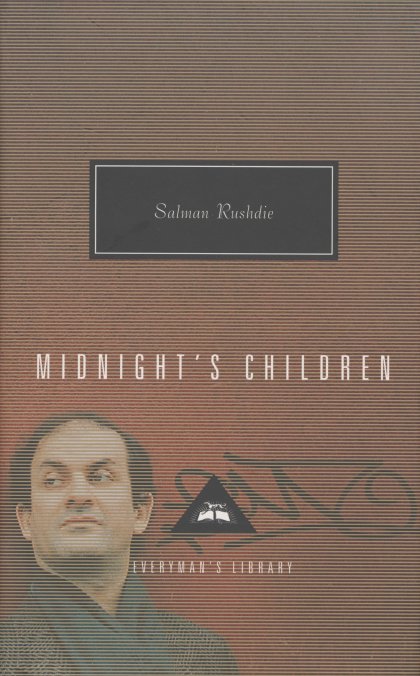
Midnight's Children
Midnight's Children
Couldn't load pickup availability
Collapsible content
ABOUT
“One of the most important books to come out of the English-speaking world in this generation.” —The New York Review of Books
Saleem Sinai, the hero of Midnight's Children, is one of the thousand and one children born in India at the stroke of midnight on August 15, 1947, the dawn of its independence from British rule—the moment, in the words of its first prime minister, Jawaharlal Nehru, when India had her "'tryst with destiny.'" The twists and turns of this destiny form the springboard from which Salman Rushdie launches into his celebrated fantasia of our modernity.
At once a fairy tale, a furious political satire, and a meditation on the ways in which time and change both shape and are shaped by the life of a single individual, Midnight's Children announced the triumphant return of epic storytelling to our highly evolved literary tradition. With its central themes of displacement and indeterminacy, and its highly original use of a polyglot vocabulary absorbed form three distinct but overlapping cultures, this book anticipated and to a certain extent defined the multifarious, dislocated, ever-expanding world in which, increasingly, we all live.
Midnight's Children won the Booker Prize in 1981 and then in 2008 it was named "'The Best of the Booker,'" the best book to have won the prize in the forty years of its existence."
Everyman's Library pursues the highest production standards, printing on acid-free cream-colored paper, with full-cloth cases with two-color foil stamping, decorative endpapers, silk ribbon markers, European-style half-round spines, and a full-color illustrated jacket. Contemporary Classics include an introduction, a select bibliography, and a chronology of the author's life and times.
STANDARD, PRIMARY, DM AND VARIANT COVERS
Standard and Primary covers are widely available through general retailers. They often have higher print runs and can be cheaper, especially during sales.
In contrast, Direct Market (DM) and variant covers are primarily sold in comic shops. DM editions tend to have more limited availability and may be more valuable to collectors.
The main differences lie in artwork style, availability, price, and collector appeal. Ultimately, the choice between standard and variant covers depends on personal preference, budget, and individual collecting goals.
PRODUCT TYPES
Comic book enthusiasts have various formats to choose from when collecting their favorite stories.
Here's a brief overview of the main types:
Omnibus
- Large, hardcover collections
- Usually contain complete runs or extensive story arcs
- Typically 800-1000+ pages
- Higher price point, often €100-€150
Oversized Hardcover (OHC)
- Similar dimensions to omnibus, but thinner
- Collect shorter runs or story arcs
- Usually 300-600 pages
- Priced between €30-€50
Hardcover (HC)
- Standard-sized hardcover books
- Collect 6-12 issues typically
- Similar dimensions to single issues, but with a hard cover
- Priced around €25-€35
Trade Paperback (TP)
- Softcover collections
- Standard comic book size
- Usually collect 4-6 issues
- Most affordable option, typically €15-€25
Other Formats
- Absolute Editions: Oversized, deluxe hardcovers (mainly DC Comics)
- Compendiums: Massive paperback collections
- Graphic Novels (OGN/GN): Original stories not previously released as single issues
The choice between these formats often depends on personal preference, budget, and collecting goals. Omnibus and OHC editions offer larger artwork and more content but at a higher price, while TPs provide a more affordable way to collect complete story arcs