

Random House Publishing Group
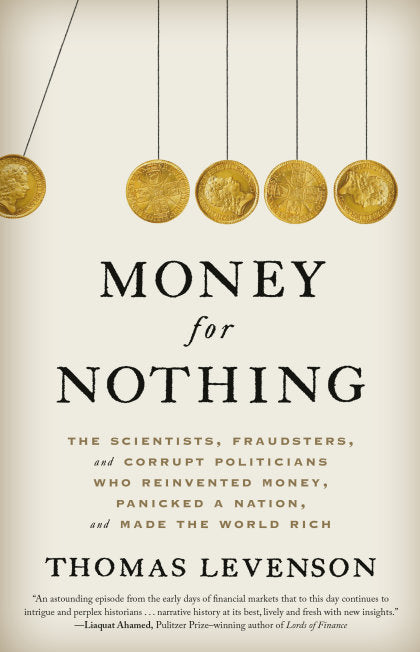
Money for Nothing
Money for Nothing
Couldn't load pickup availability
Collapsible content
ABOUT
A Financial Times Economics Book of the Year ● Longlisted for the Financial Times/McKinsey Business Book of the Year Award
In the heart of the Scientific Revolution, when new theories promised to explain the affairs of the universe, Britain was broke, facing a mountain of debt accumulated in war after war it could not afford. But that same Scientific Revolution—the kind of thinking that helped Isaac Newton solve the mysteries of the cosmos—would soon lead clever, if not always scrupulous, men to try to figure a way out of Britain’s financial troubles.
Enter the upstart leaders of the South Sea Company. In 1719, they laid out a grand plan to swap citizens’ shares of the nation’s debt for company stock, removing the burden from the state and making South Sea’s directors a fortune in the process. Everybody would win. The king’s ministers took the bait—and everybody did win. Far too much, far too fast. The following crash came suddenly in a rush of scandal, jail, suicide, and ruin. But thanks to Britain’s leader, Robert Walpole, the kingdom found its way through to emerge with the first truly modern, reliable, and stable financial exchange.
Thomas Levenson’s Money for Nothing tells the unbelievable story of the South Sea Bubble with all the exuberance, folly, and the catastrophe of an event whose impact can still be felt today.
STANDARD, PRIMARY, DM AND VARIANT COVERS
Standard and Primary covers are widely available through general retailers. They often have higher print runs and can be cheaper, especially during sales.
In contrast, Direct Market (DM) and variant covers are primarily sold in comic shops. DM editions tend to have more limited availability and may be more valuable to collectors.
The main differences lie in artwork style, availability, price, and collector appeal. Ultimately, the choice between standard and variant covers depends on personal preference, budget, and individual collecting goals.
PRODUCT TYPES
Comic book enthusiasts have various formats to choose from when collecting their favorite stories.
Here's a brief overview of the main types:
Omnibus
- Large, hardcover collections
- Usually contain complete runs or extensive story arcs
- Typically 800-1000+ pages
- Higher price point, often €100-€150
Oversized Hardcover (OHC)
- Similar dimensions to omnibus, but thinner
- Collect shorter runs or story arcs
- Usually 300-600 pages
- Priced between €30-€50
Hardcover (HC)
- Standard-sized hardcover books
- Collect 6-12 issues typically
- Similar dimensions to single issues, but with a hard cover
- Priced around €25-€35
Trade Paperback (TP)
- Softcover collections
- Standard comic book size
- Usually collect 4-6 issues
- Most affordable option, typically €15-€25
Other Formats
- Absolute Editions: Oversized, deluxe hardcovers (mainly DC Comics)
- Compendiums: Massive paperback collections
- Graphic Novels (OGN/GN): Original stories not previously released as single issues
The choice between these formats often depends on personal preference, budget, and collecting goals. Omnibus and OHC editions offer larger artwork and more content but at a higher price, while TPs provide a more affordable way to collect complete story arcs