

Crown
Mrs. Lincoln and Mrs. Keckly
Mrs. Lincoln and Mrs. Keckly
Couldn't load pickup availability
Collapsible content
ABOUT
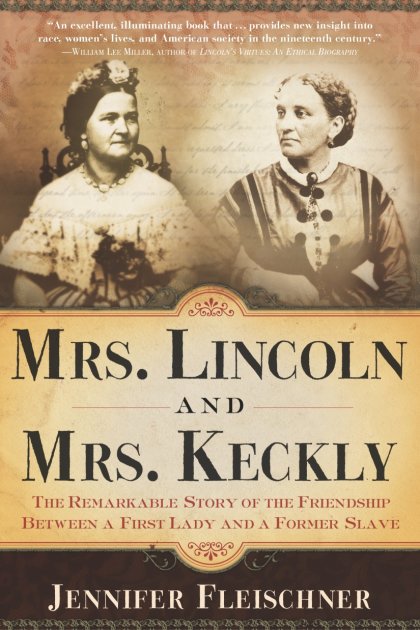
“I consider you my best living friend,” Mary Lincoln wrote to Elizabeth Keckly in 1867, and indeed theirs was a close, if tumultuous, relationship. Born into slavery, mulatto Elizabeth Keckly was Mary Lincoln’s dressmaker, confidante, and mainstay during the difficult years that the Lincolns occupied the White House and the early years of Mary’s widowhood. But she was a fascinating woman in her own right, Lizzy had bought her freedom in 1855 and come to Washington determined to make a life for herself. She was independent and already well-established as the dressmaker to the Washington elite when she was first hired by Mary Lincoln upon her arrival in the nation’s capital. Mary Lincoln hired Lizzy in part because she was considered a “high society” seamstress and Mary, as an outsider in Washington’s social circles, was desperate for social cachet. With her husband struggling to keep the nation together, Mary turned increasingly to her seamstress for companionship, support, and advice—and over the course of those trying years, Lizzy Keckly became her confidante and closest friend.
Historian Jennifer Fleischner allows us to glimpse the intimate dynamics of this unusual friendship for the first time, and traces the pivotal events that enabled these two women to forge such an unlikely bond at a time when relations between blacks and whites were tearing the nation apart. Mrs. Lincoln and Mrs. Keckly is a remarkable work of scholarship that explores the legacy of slavery and sheds new light on the Lincoln White House.
STANDARD, PRIMARY, DM AND VARIANT COVERS
Standard and Primary covers are widely available through general retailers. They often have higher print runs and can be cheaper, especially during sales.
In contrast, Direct Market (DM) and variant covers are primarily sold in comic shops. DM editions tend to have more limited availability and may be more valuable to collectors.
The main differences lie in artwork style, availability, price, and collector appeal. Ultimately, the choice between standard and variant covers depends on personal preference, budget, and individual collecting goals.
PRODUCT TYPES
Comic book enthusiasts have various formats to choose from when collecting their favorite stories.
Here's a brief overview of the main types:
Omnibus
- Large, hardcover collections
- Usually contain complete runs or extensive story arcs
- Typically 800-1000+ pages
- Higher price point, often €100-€150
Oversized Hardcover (OHC)
- Similar dimensions to omnibus, but thinner
- Collect shorter runs or story arcs
- Usually 300-600 pages
- Priced between €30-€50
Hardcover (HC)
- Standard-sized hardcover books
- Collect 6-12 issues typically
- Similar dimensions to single issues, but with a hard cover
- Priced around €25-€35
Trade Paperback (TP)
- Softcover collections
- Standard comic book size
- Usually collect 4-6 issues
- Most affordable option, typically €15-€25
Other Formats
- Absolute Editions: Oversized, deluxe hardcovers (mainly DC Comics)
- Compendiums: Massive paperback collections
- Graphic Novels (OGN/GN): Original stories not previously released as single issues
The choice between these formats often depends on personal preference, budget, and collecting goals. Omnibus and OHC editions offer larger artwork and more content but at a higher price, while TPs provide a more affordable way to collect complete story arcs