

Clarkson Potter/Ten Speed
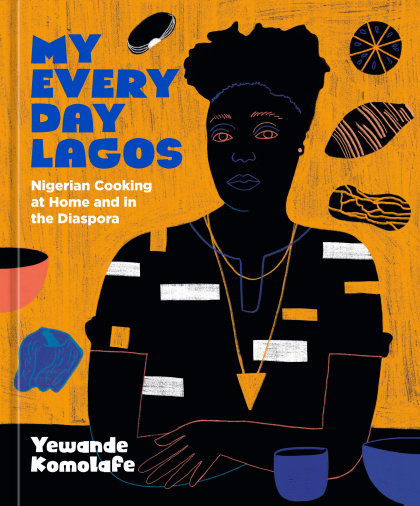
My Everyday Lagos
My Everyday Lagos
Couldn't load pickup availability
Collapsible content
ABOUT
A BEST COOKBOOK OF THE YEAR: The New York Times, Los Angeles Times, Food Network, The Boston Globe, Good Housekeeping, Epicurious, Delish
The city of Lagos, Nigeria, is a key part of a larger conversation about West African cuisine and its influences throughout the world. My Everyday Lagos consists of 75 dishes that are all served in recipe developer and food stylist Yewande Komolafe's fast-paced, ever-changing home city of Lagos. These recipes reflect the regional cooking of the country and reveal two complementary qualities of Nigerian cuisine—its singularity and accessibility. Along the way, through informative essays that place ingredients in historical context, Yewande explains how in a country where dozens of ethnic groups interact, a cuisine has developed that transcends tribal boundaries.
Yewande's personal narrative is woven throughout the book and cautions against being burdened by notions of authenticity. To those in the African diaspora, this book highlights food that may have been adapted and integrated into the cuisines of the places they live. The bukas of London, Houston, Atlanta, Chicago, Toronto, and Newark all have their unique vision of Nigeria and are reflected in their food. The recipes, including classics like Jollof Rice, Puff Puff, and Groundnut Stew, are a starting point for the home cook, allowing them to trust the ingredients and achieve the variety of textures and flavors Nigerian food is known for. Beautiful photographs of the city and its people invite readers into the energy and pulse of Lagos, while the food photography entices them to make each and every dish in the book.
This stunning cookbook is Yewande Komolafe's in-depth exploration of a cuisine as well as the definitive book on Lagos cuisine that reveals the nuances of regions and peoples, diaspora and return—but also tells her own story of gathering the scattered pieces of herself through understanding her home country and food.
STANDARD, PRIMARY, DM AND VARIANT COVERS
Standard and Primary covers are widely available through general retailers. They often have higher print runs and can be cheaper, especially during sales.
In contrast, Direct Market (DM) and variant covers are primarily sold in comic shops. DM editions tend to have more limited availability and may be more valuable to collectors.
The main differences lie in artwork style, availability, price, and collector appeal. Ultimately, the choice between standard and variant covers depends on personal preference, budget, and individual collecting goals.
PRODUCT TYPES
Comic book enthusiasts have various formats to choose from when collecting their favorite stories.
Here's a brief overview of the main types:
Omnibus
- Large, hardcover collections
- Usually contain complete runs or extensive story arcs
- Typically 800-1000+ pages
- Higher price point, often €100-€150
Oversized Hardcover (OHC)
- Similar dimensions to omnibus, but thinner
- Collect shorter runs or story arcs
- Usually 300-600 pages
- Priced between €30-€50
Hardcover (HC)
- Standard-sized hardcover books
- Collect 6-12 issues typically
- Similar dimensions to single issues, but with a hard cover
- Priced around €25-€35
Trade Paperback (TP)
- Softcover collections
- Standard comic book size
- Usually collect 4-6 issues
- Most affordable option, typically €15-€25
Other Formats
- Absolute Editions: Oversized, deluxe hardcovers (mainly DC Comics)
- Compendiums: Massive paperback collections
- Graphic Novels (OGN/GN): Original stories not previously released as single issues
The choice between these formats often depends on personal preference, budget, and collecting goals. Omnibus and OHC editions offer larger artwork and more content but at a higher price, while TPs provide a more affordable way to collect complete story arcs