

Disney Publishing Group
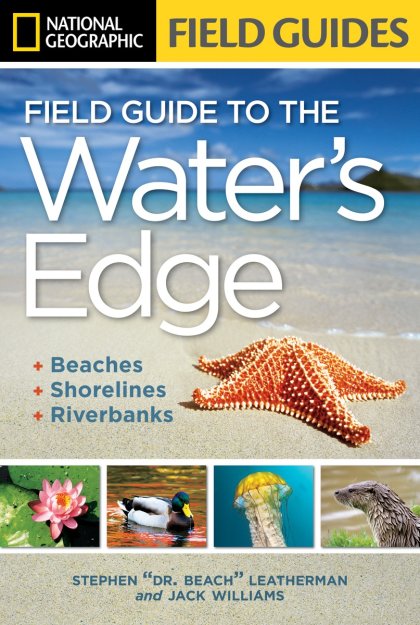
National Geographic Field Guide to the Water's Edge
National Geographic Field Guide to the Water's Edge
Couldn't load pickup availability
Collapsible content
ABOUT
Main sections of the book cover three ocean coastlines--Atlantic, Gulf of Mexico, and Pacific; estuaries and wetlands; lakes, including the Great Lakes; and rivers, from the great Mississippi and Columbia to backyard streams. Identification guides and interesting information on plants, animals, shells, and other curiosities to be found along each water's edge accompany photographs and illustrations. Useful and inviting sidebars enhance every page:
· Shore Science--Quick hits and fascinating facts of science along the water's edge
· Stay Safe--Alerts about shoreline dangers and how to avoid or respond to them
· Beachcomber's Guide--Illustrated key to objects found in each beach and shoreline region
· Save the Shore--Notes on how humans can hurt--and help--shoreline ecology
· Best Water's Edge--Throughout, "Dr. Beach" recommends the top beach or shoreline destinations
The book is profusely illustrated with photographs, maps, and explanatory diagrams. An introductory section provides a thorough overview of the basic science of shorelines: How water interacts with land to form beaches; how various kinds of shorelines formed; why large waves are needed to form beaches; how floods and fast-moving water alters river shorelines; how the gravitational pull of the moon and sun cause the tides; why the oceans have tides but the Great Lakes don't; how tides affect rivers far inland; the effects of latitude and climate on the formation of shorelines, including variations in plants and animals. This opening sets up all the science necessary to understand and use the rest of the book.
STANDARD, PRIMARY, DM AND VARIANT COVERS
Standard and Primary covers are widely available through general retailers. They often have higher print runs and can be cheaper, especially during sales.
In contrast, Direct Market (DM) and variant covers are primarily sold in comic shops. DM editions tend to have more limited availability and may be more valuable to collectors.
The main differences lie in artwork style, availability, price, and collector appeal. Ultimately, the choice between standard and variant covers depends on personal preference, budget, and individual collecting goals.
PRODUCT TYPES
Comic book enthusiasts have various formats to choose from when collecting their favorite stories.
Here's a brief overview of the main types:
Omnibus
- Large, hardcover collections
- Usually contain complete runs or extensive story arcs
- Typically 800-1000+ pages
- Higher price point, often €100-€150
Oversized Hardcover (OHC)
- Similar dimensions to omnibus, but thinner
- Collect shorter runs or story arcs
- Usually 300-600 pages
- Priced between €30-€50
Hardcover (HC)
- Standard-sized hardcover books
- Collect 6-12 issues typically
- Similar dimensions to single issues, but with a hard cover
- Priced around €25-€35
Trade Paperback (TP)
- Softcover collections
- Standard comic book size
- Usually collect 4-6 issues
- Most affordable option, typically €15-€25
Other Formats
- Absolute Editions: Oversized, deluxe hardcovers (mainly DC Comics)
- Compendiums: Massive paperback collections
- Graphic Novels (OGN/GN): Original stories not previously released as single issues
The choice between these formats often depends on personal preference, budget, and collecting goals. Omnibus and OHC editions offer larger artwork and more content but at a higher price, while TPs provide a more affordable way to collect complete story arcs