

Penguin Publishing Group
Nearshore
Nearshore
Couldn't load pickup availability
Collapsible content
ABOUT
—Kem Nunn, author of Tapping the Source, Dogs of Winter, and Tijuana Straits
“Nearshore is the best novel of homegrown nuclear terrorism yet written, chillingly credible, terrifying, and all too plausible.”
—Richard Rhodes, Pulitzer Prize-winning author of The Making of the Atomic Bomb
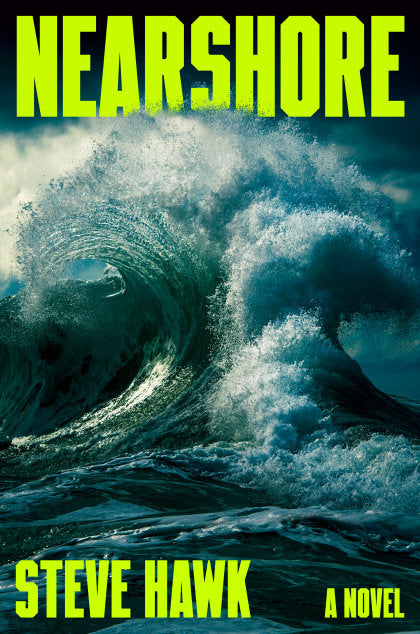
A churning mix of literary suspense and coastal noir—where the clash between land and sea unearths Silicon Valley’s darkest secret, and three people must reckon with all that is at stake in an age shadowed by greed, totalitarianism, and nuclear terror.
Daybreak. West Virginia. A “small” nuclear bomb detonates beside an Appalachian highway. The weapon’s explosive yield is meager, the death count blessedly low. And yet: It is history’s first act of nuclear terrorism, and it threatens to tilt the world beyond reckoning.
Months later, surfer and lifeguard Jamie Palmer is patrolling his domain, a treacherous stretch of wild California coast, when he responds to a mysterious nearshore boating accident that jettisoned two people overboard. The victims turn out to be Palmer’s best friend—a brilliant, renegade Stanford University professor—and the man’s teenage son, Luca. The professor drowns, Luca survives—leaving Palmer as the boy’s guardian.
Soon after, Chelsea Wu, a math prodigy and doctoral student, confides to Palmer that she and the professor unearthed a link between a Silicon Valley megacorporation, its sociopathic billionaire founder, and the nuke in West Virginia. When a second device is detonated, this unlikely team—the surfer, the orphan, and the math whiz—must persuade investigators that the bombmakers are not only homegrown but also hiding in plain sight.
An immersive and disturbingly plausible debut, Nearshore delivers a mix of literary suspense and coastal noir. Moving with the speed of a barreling wave, Nearshore also explores deeper clashes: isolation versus community and family, Silicon Valley versus humanity, words versus action, land versus sea.
STANDARD, PRIMARY, DM AND VARIANT COVERS
Standard and Primary covers are widely available through general retailers. They often have higher print runs and can be cheaper, especially during sales.
In contrast, Direct Market (DM) and variant covers are primarily sold in comic shops. DM editions tend to have more limited availability and may be more valuable to collectors.
The main differences lie in artwork style, availability, price, and collector appeal. Ultimately, the choice between standard and variant covers depends on personal preference, budget, and individual collecting goals.
PRODUCT TYPES
Comic book enthusiasts have various formats to choose from when collecting their favorite stories.
Here's a brief overview of the main types:
Omnibus
- Large, hardcover collections
- Usually contain complete runs or extensive story arcs
- Typically 800-1000+ pages
- Higher price point, often €100-€150
Oversized Hardcover (OHC)
- Similar dimensions to omnibus, but thinner
- Collect shorter runs or story arcs
- Usually 300-600 pages
- Priced between €30-€50
Hardcover (HC)
- Standard-sized hardcover books
- Collect 6-12 issues typically
- Similar dimensions to single issues, but with a hard cover
- Priced around €25-€35
Trade Paperback (TP)
- Softcover collections
- Standard comic book size
- Usually collect 4-6 issues
- Most affordable option, typically €15-€25
Other Formats
- Absolute Editions: Oversized, deluxe hardcovers (mainly DC Comics)
- Compendiums: Massive paperback collections
- Graphic Novels (OGN/GN): Original stories not previously released as single issues
The choice between these formats often depends on personal preference, budget, and collecting goals. Omnibus and OHC editions offer larger artwork and more content but at a higher price, while TPs provide a more affordable way to collect complete story arcs