

Penguin Publishing Group
Needled
Needled
Couldn't load pickup availability
Collapsible content
ABOUT
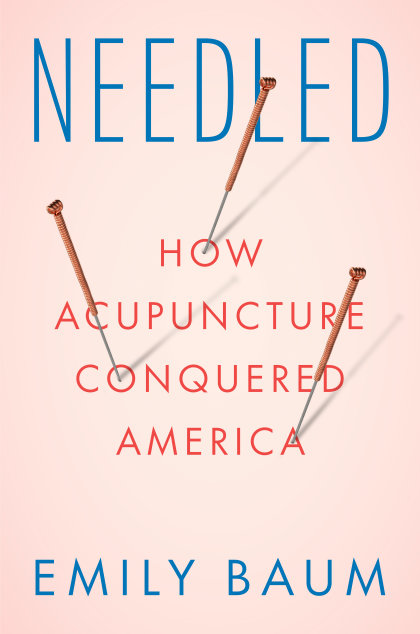
Since acupuncture first burst into the Western popular consciousness in the 1970s, doctors and the public alike have clamored to try it and struggled with what to make of it. Thousands of studies and millions of dollars have been poured into determining how and why the practice works to stop or manage pain and other ailments—but it remains, officially, a mystery. That hasn’t stopped its growth; now a multimillion-dollar industry and often recommended by physicians and covered by insurance, acupuncture in the U.S. is more popular than ever. So why has it never been able to shake the label of “alternative” medicine, and what does that designation even mean?
To investigate acupuncture’s continued outsider status, Emily Baum traces the practice’s contentious trajectory over the past fifty years. Soon after the first Western journalists and doctors were invited to visit a newly reopening communist China, acupuncture became an overnight American sensation, as well as a thorn in the side of the pain-management industry, the object of parapsychological fascination, and a critical diplomatic tool for the new Chinese leader, Deng Xiaoping. Even as the practice became commonplace over the following decades, it remained “alternative” as a result of lingering Cold War suspicions and a fundamental lack of consensus among medical experts.
Moving from the bold experimentations of the Cold War to the hospital rooms of today, Needled uncovers the surprising history of how acupuncture became marginalized within establishment medicine—exposing, in the process, the uncomfortable shortcomings of modern medical knowledge and how we behave when we encounter those limits.
STANDARD, PRIMARY, DM AND VARIANT COVERS
Standard and Primary covers are widely available through general retailers. They often have higher print runs and can be cheaper, especially during sales.
In contrast, Direct Market (DM) and variant covers are primarily sold in comic shops. DM editions tend to have more limited availability and may be more valuable to collectors.
The main differences lie in artwork style, availability, price, and collector appeal. Ultimately, the choice between standard and variant covers depends on personal preference, budget, and individual collecting goals.
PRODUCT TYPES
Comic book enthusiasts have various formats to choose from when collecting their favorite stories.
Here's a brief overview of the main types:
Omnibus
- Large, hardcover collections
- Usually contain complete runs or extensive story arcs
- Typically 800-1000+ pages
- Higher price point, often €100-€150
Oversized Hardcover (OHC)
- Similar dimensions to omnibus, but thinner
- Collect shorter runs or story arcs
- Usually 300-600 pages
- Priced between €30-€50
Hardcover (HC)
- Standard-sized hardcover books
- Collect 6-12 issues typically
- Similar dimensions to single issues, but with a hard cover
- Priced around €25-€35
Trade Paperback (TP)
- Softcover collections
- Standard comic book size
- Usually collect 4-6 issues
- Most affordable option, typically €15-€25
Other Formats
- Absolute Editions: Oversized, deluxe hardcovers (mainly DC Comics)
- Compendiums: Massive paperback collections
- Graphic Novels (OGN/GN): Original stories not previously released as single issues
The choice between these formats often depends on personal preference, budget, and collecting goals. Omnibus and OHC editions offer larger artwork and more content but at a higher price, while TPs provide a more affordable way to collect complete story arcs