

Random House Publishing Group
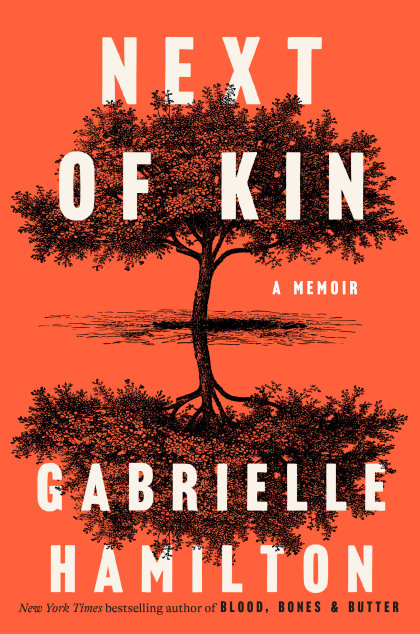
Next of Kin
Next of Kin
Couldn't load pickup availability
Collapsible content
ABOUT
“Hamilton’s voice is as singular and rollicking as ever in Next of Kin, but it feels rare and special to have it applied to the kind of complicated family history that so many of us only come to confront in adulthood (if at all).”—Vogue
“We were a family veined through with certain brutalities, rifts, and unresolved conflicts, as well as some remarkable violences and some decades-long silences. But together we had rituals, systems, congruent cohering events that made us who we were as one. I thought of the black and blue marks as if they were the desirable spores of mold found in noble cheeses.”
The youngest of five children, Gabrielle Hamilton took pride in her unsentimental, idiosyncratic family. She idolized her parents’ charisma and non-conformity. She worshipped her siblings’ mischievousness and flair. Hers was a family with no fondness for the humdrum.
Hamilton grew up to find enormous success, first as a chef and then as the author of award-winning, bestselling books. But her family ties frayed in ways both seismic and mundane until eventually she was estranged from them all. In the wake of one brother’s sudden death and another’s suicide, while raising young children of her own, Hamilton was compelled to examine the sprawling, complicated root system underlying her losses. She began investigating her family’s devout independence and individualism with a nearly forensic rigor, soon discovering a sobering warning in their long-held self-satisfaction. By the time she was called to care for her declining mother—the mother she’d seen only twice in thirty years—Hamilton had realized a certain freedom, one made possible only through a careful psychological autopsy of her family.
Hamilton’s gift for pungent dialogue, propulsive storytelling, intense honesty, and raucous humor made her first book a classic of modern memoir. In Next of Kin, she offers a keen and compassionate portrait of the people she grew up with and the prevailing but soon-to-falter ethos of the era that produced them. A personal account of one family’s disintegration, Next of Kin is also a universal story of the emotional clarity that comes from scrutinizing our family mythologies and seeing through to the other side.
STANDARD, PRIMARY, DM AND VARIANT COVERS
Standard and Primary covers are widely available through general retailers. They often have higher print runs and can be cheaper, especially during sales.
In contrast, Direct Market (DM) and variant covers are primarily sold in comic shops. DM editions tend to have more limited availability and may be more valuable to collectors.
The main differences lie in artwork style, availability, price, and collector appeal. Ultimately, the choice between standard and variant covers depends on personal preference, budget, and individual collecting goals.
PRODUCT TYPES
Comic book enthusiasts have various formats to choose from when collecting their favorite stories.
Here's a brief overview of the main types:
Omnibus
- Large, hardcover collections
- Usually contain complete runs or extensive story arcs
- Typically 800-1000+ pages
- Higher price point, often €100-€150
Oversized Hardcover (OHC)
- Similar dimensions to omnibus, but thinner
- Collect shorter runs or story arcs
- Usually 300-600 pages
- Priced between €30-€50
Hardcover (HC)
- Standard-sized hardcover books
- Collect 6-12 issues typically
- Similar dimensions to single issues, but with a hard cover
- Priced around €25-€35
Trade Paperback (TP)
- Softcover collections
- Standard comic book size
- Usually collect 4-6 issues
- Most affordable option, typically €15-€25
Other Formats
- Absolute Editions: Oversized, deluxe hardcovers (mainly DC Comics)
- Compendiums: Massive paperback collections
- Graphic Novels (OGN/GN): Original stories not previously released as single issues
The choice between these formats often depends on personal preference, budget, and collecting goals. Omnibus and OHC editions offer larger artwork and more content but at a higher price, while TPs provide a more affordable way to collect complete story arcs