

Knopf Doubleday Publishing Group
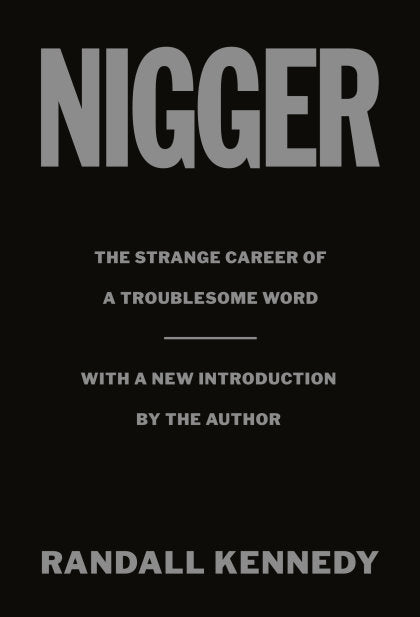
Nigger
Nigger
Couldn't load pickup availability
Collapsible content
ABOUT
In addition to a brave and bracing inquiry into the origins, uses, and impact of the infamous word, this edition features an extensive new introduction that addresses major developments in its evolution during the last two decades of its vexed history.
In the new introduction to his classic work, Kennedy questions the claim that “nigger” is the most tabooed term in the American language, faced with the implacable prevalence of its old-fashioned anti-Black sense. “Nigger” continues to be part of the loud soundtrack of the worst instances of racial aggression in American life—racially motivated assaults and murders, arson, intentional infliction of emotional distress, and workplace harassment.
Consider this: twenty years ago, Kennedy wrote that any major politician credibly accused of using “nigger” would be immediately abandoned and ostracized. He was wrong. Donald Trump, former POTUS himself, was credibly charged, and the allegation caused little more than a yawn. No one doubted the accuracy of the claim but amidst all his other racist acts his “nigger-baiting” no longer seemed shocking. “Nigger” is still very much alive and all too widely accepted.
On the other hand, Kennedy is concerned to address the many episodes in which people have been punished for quoting, enunciating, or saying “nigger” in circumstances that should have made it clear that the speakers were doing nothing wrong—or at least nothing sufficiently wrong to merit the extent of the denunciation they suffered.
He discusses, for example, the inquisition of Bill Maher (and his pathetic apology) and the (white) teachers who have been disciplined for reading out loud texts that contain “nigger.” He argues that in assessing these controversies, we ought to be more careful about the use/mention distinction: menacingly calling someone a “nigger” is wholly different than quoting a sentence from a text by James Baldwin or Toni Morrison or Flannery O’Connor or Mark Twain.
Kennedy argues against the proposition that different rules should apply depending upon the race of the speaker of “nigger,” offering stunningly commonsensical reasons for abjuring the erection of such boundaries.
He concludes by venturing a forecast about the likely status of “nigger” in American culture during the next twenty years when we will see the clear ascendance of a so-called “minority majority” body politic—which term itself is redolent of white supremacy.
STANDARD, PRIMARY, DM AND VARIANT COVERS
Standard and Primary covers are widely available through general retailers. They often have higher print runs and can be cheaper, especially during sales.
In contrast, Direct Market (DM) and variant covers are primarily sold in comic shops. DM editions tend to have more limited availability and may be more valuable to collectors.
The main differences lie in artwork style, availability, price, and collector appeal. Ultimately, the choice between standard and variant covers depends on personal preference, budget, and individual collecting goals.
PRODUCT TYPES
Comic book enthusiasts have various formats to choose from when collecting their favorite stories.
Here's a brief overview of the main types:
Omnibus
- Large, hardcover collections
- Usually contain complete runs or extensive story arcs
- Typically 800-1000+ pages
- Higher price point, often €100-€150
Oversized Hardcover (OHC)
- Similar dimensions to omnibus, but thinner
- Collect shorter runs or story arcs
- Usually 300-600 pages
- Priced between €30-€50
Hardcover (HC)
- Standard-sized hardcover books
- Collect 6-12 issues typically
- Similar dimensions to single issues, but with a hard cover
- Priced around €25-€35
Trade Paperback (TP)
- Softcover collections
- Standard comic book size
- Usually collect 4-6 issues
- Most affordable option, typically €15-€25
Other Formats
- Absolute Editions: Oversized, deluxe hardcovers (mainly DC Comics)
- Compendiums: Massive paperback collections
- Graphic Novels (OGN/GN): Original stories not previously released as single issues
The choice between these formats often depends on personal preference, budget, and collecting goals. Omnibus and OHC editions offer larger artwork and more content but at a higher price, while TPs provide a more affordable way to collect complete story arcs