

Beacon Press
Not in Our Classrooms
Not in Our Classrooms
Couldn't load pickup availability
Collapsible content
ABOUT
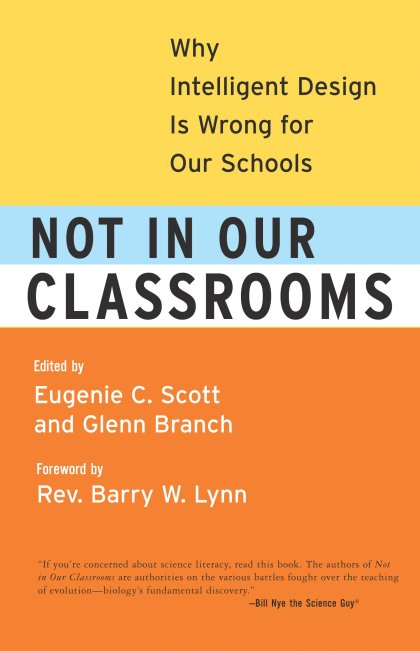
More than eighty years after the Scopes trial, creationism is alive and well. Through local school boards, sympathetic politicians, and well-funded organizations, a strong movement has developed to encourage the teaching of the latest incarnation of creationism—intelligent design—as a scientifically credible theory alongside evolution in science classes. Although intelligent design suffered a serious defeat in the recent Kitzmiller v. Dover trial, its proponents are bound to continue their assault on evolution education. Now, in Not in Our Classrooms, parents and teachers, as well as other concerned citizens, have a much-needed tool to use in the argument against teaching intelligent design as science.
Where did the concept of intelligent design originate? How does it connect with, and conflict with, various religious beliefs? Should we teach the controversy itself in our science classrooms? In clear and lively essays, a team of experts answers these questions and many more, describing the history of the intelligent design movement and the lack of scientific support for its claims. Most importantly, the contributors—authorities on the scientific, legal, educational, and theological problems of intelligent design-speak specifically to teachers and parents about the need to defend the integrity of science education by keeping intelligent design out of science curriculums. A concluding chapter offers concrete advice for those seeking to defend the teaching of evolution in their own communities.
Not in Our Classrooms is essential reading for anyone concerned about defending the teaching of evolution, uncompromised by religiously motivated pseudoscience, in the classrooms of our public schools.
PRE-ORDER
Secure the best deal by acting fast! Our Pre-Order promo offers unbeatable prices on must-have items. Be quick to lock in the lowest cost before the promo ends.
The best part? You won't be charged until your item is ready to ship. This means you can reserve your product at the best price without immediate payment. Whether you're first in line or just ahead of the crowd, you're making a smart choice. Reserve your item now and enjoy the benefits of being an early buyer, with the added flexibility of delayed payment!
STANDARD, PRIMARY, DM AND VARIANT COVERS
Standard and Primary covers are widely available through general retailers. They often have higher print runs and can be cheaper, especially during sales.
In contrast, Direct Market (DM) and variant covers are primarily sold in comic shops. DM editions tend to have more limited availability and may be more valuable to collectors.
The main differences lie in artwork style, availability, price, and collector appeal. Ultimately, the choice between standard and variant covers depends on personal preference, budget, and individual collecting goals.
PRODUCT TYPES
Comic book enthusiasts have various formats to choose from when collecting their favorite stories.
Here's a brief overview of the main types:
Omnibus
- Large, hardcover collections
- Usually contain complete runs or extensive story arcs
- Typically 800-1000+ pages
- Higher price point, often €100-€150
Oversized Hardcover (OHC)
- Similar dimensions to omnibus, but thinner
- Collect shorter runs or story arcs
- Usually 300-600 pages
- Priced between €30-€50
Hardcover (HC)
- Standard-sized hardcover books
- Collect 6-12 issues typically
- Similar dimensions to single issues, but with a hard cover
- Priced around €25-€35
Trade Paperback (TP)
- Softcover collections
- Standard comic book size
- Usually collect 4-6 issues
- Most affordable option, typically €15-€25
Other Formats
- Absolute Editions: Oversized, deluxe hardcovers (mainly DC Comics)
- Compendiums: Massive paperback collections
- Graphic Novels (OGN/GN): Original stories not previously released as single issues
The choice between these formats often depends on personal preference, budget, and collecting goals. Omnibus and OHC editions offer larger artwork and more content but at a higher price, while TPs provide a more affordable way to collect complete story arcs