

Beacon Press
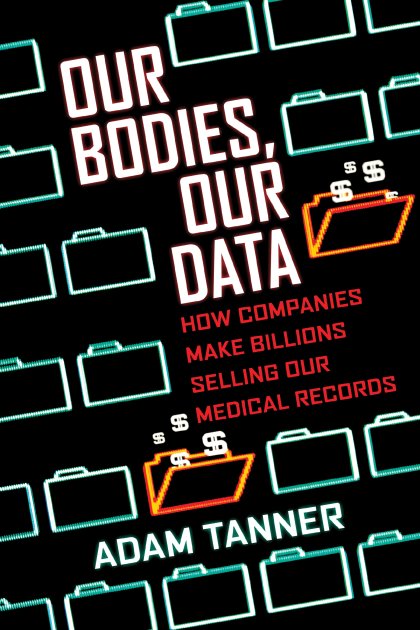
Our Bodies, Our Data
Our Bodies, Our Data
Couldn't load pickup availability
Collapsible content
ABOUT
Hidden to consumers, patient medical data has become a multibillion-dollar worldwide trade industry between our health-care providers, drug companies, and a complex web of middlemen. This great medical-data bazaar sells copies of the prescription you recently filled, your hospital records, insurance claims, blood-test results, and more, stripped of your name but possibly with identifiers such as year of birth, gender, and doctor. As computing grows ever more sophisticated, patient dossiers become increasingly vulnerable to reidentification and the possibility of being targeted by identity thieves or hackers.
Paradoxically, comprehensive electronic files for patient treatment—the reason medical data exists in the first place—remain an elusive goal. Even today, patients or their doctors rarely have easy access to comprehensive records that could improve care. In the evolution of medical data, the instinct for profit has outstripped patient needs. This book tells the human, behind-the-scenes story of how such a system evolved internationally.
It begins with New York advertising man Ludwig Wolfgang Frohlich, who founded IMS Health, the world’s dominant health-data miner, in the 1950s. IMS Health now gathers patient medical data from more than 45 billion transactions annually from 780,000 data feeds in more than 100 countries. Our Bodies, Our Data uncovers some of Frohlich’s hidden past and follows the story of what happened in the following decades. This is both a story about medicine and medical practice, and about big business and maximizing profits, and the places these meet, places most patients would like to believe are off-limits.
Our Bodies, Our Data seeks to spark debate on how we can best balance the promise big data offers to advance medicine and improve lives while preserving the rights and interests of every patient. We, the public, deserve a say in this discussion. After all, it’s our data.
STANDARD, PRIMARY, DM AND VARIANT COVERS
Standard and Primary covers are widely available through general retailers. They often have higher print runs and can be cheaper, especially during sales.
In contrast, Direct Market (DM) and variant covers are primarily sold in comic shops. DM editions tend to have more limited availability and may be more valuable to collectors.
The main differences lie in artwork style, availability, price, and collector appeal. Ultimately, the choice between standard and variant covers depends on personal preference, budget, and individual collecting goals.
PRODUCT TYPES
Comic book enthusiasts have various formats to choose from when collecting their favorite stories.
Here's a brief overview of the main types:
Omnibus
- Large, hardcover collections
- Usually contain complete runs or extensive story arcs
- Typically 800-1000+ pages
- Higher price point, often €100-€150
Oversized Hardcover (OHC)
- Similar dimensions to omnibus, but thinner
- Collect shorter runs or story arcs
- Usually 300-600 pages
- Priced between €30-€50
Hardcover (HC)
- Standard-sized hardcover books
- Collect 6-12 issues typically
- Similar dimensions to single issues, but with a hard cover
- Priced around €25-€35
Trade Paperback (TP)
- Softcover collections
- Standard comic book size
- Usually collect 4-6 issues
- Most affordable option, typically €15-€25
Other Formats
- Absolute Editions: Oversized, deluxe hardcovers (mainly DC Comics)
- Compendiums: Massive paperback collections
- Graphic Novels (OGN/GN): Original stories not previously released as single issues
The choice between these formats often depends on personal preference, budget, and collecting goals. Omnibus and OHC editions offer larger artwork and more content but at a higher price, while TPs provide a more affordable way to collect complete story arcs