

Crown
Our Wild Familiars
Our Wild Familiars
Couldn't load pickup availability
Collapsible content
ABOUT
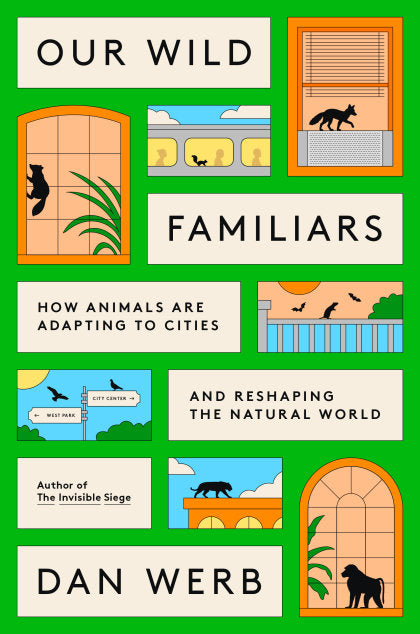
Synanthropes have always been an immutable part of the tapestry of our lives. They are the reason we hear birdsong in the morning and skittering throughout the day, and why we take such pains to fix lids to our garbage cans. But they are so much more than that, too: epidemic vectors, churners of soil, ecosystem evolvers, spiritual lodestars, and, sometimes, sharp-toothed marauders making their way through our most intimate spaces with cruel intent. But beyond their quotidian impact on our lives, synanthropes have a critical part to play in how our communities are shaped and how sustainably they function. These creatures are ambassadors from nature, arbiters of our planet’s future, and a key influence on our species’ ongoing evolution; and recently, something essential has shifted with them.
We are in a fraught era of environmental disruption, habitat destruction, and human population expansion that is ravaging formerly wild and untouched habitats. That’s caused us to become ever more inundated with synanthropes, which are bringing delight, chaos and danger to our doorstep. These species, so long dismissed, are forcing us to reckon with them—from the hundreds of thousands of raccoons in urban spaces that spread our refuse no matter how many "raccoon-proof" bags and bins we invent, to the invasive kudzu plants that grow a foot a day, enveloping houses, telephone poles, trees, and any other structures into their green abyss. Now, as urban spaces increasingly become wild spaces, we have a choice: continue to resist them by any means necessary, or take the opportunity to promote a more harmonious coexistence.
Through vivid storytelling, Our Wild Familiars brings to spectacular life the world’s most successful synanthropes, from bats, raccoons, and crows, to some of its weirdest, including the Giant Pacific Octopus. Acting as a guide to the curious, Werb reveals how the cracks in our millennia-long efforts to shield ourselves against the outside world might just lead us to a new and necessary balance with nature—or to an ever more savage future.
STANDARD, PRIMARY, DM AND VARIANT COVERS
Standard and Primary covers are widely available through general retailers. They often have higher print runs and can be cheaper, especially during sales.
In contrast, Direct Market (DM) and variant covers are primarily sold in comic shops. DM editions tend to have more limited availability and may be more valuable to collectors.
The main differences lie in artwork style, availability, price, and collector appeal. Ultimately, the choice between standard and variant covers depends on personal preference, budget, and individual collecting goals.
PRODUCT TYPES
Comic book enthusiasts have various formats to choose from when collecting their favorite stories.
Here's a brief overview of the main types:
Omnibus
- Large, hardcover collections
- Usually contain complete runs or extensive story arcs
- Typically 800-1000+ pages
- Higher price point, often €100-€150
Oversized Hardcover (OHC)
- Similar dimensions to omnibus, but thinner
- Collect shorter runs or story arcs
- Usually 300-600 pages
- Priced between €30-€50
Hardcover (HC)
- Standard-sized hardcover books
- Collect 6-12 issues typically
- Similar dimensions to single issues, but with a hard cover
- Priced around €25-€35
Trade Paperback (TP)
- Softcover collections
- Standard comic book size
- Usually collect 4-6 issues
- Most affordable option, typically €15-€25
Other Formats
- Absolute Editions: Oversized, deluxe hardcovers (mainly DC Comics)
- Compendiums: Massive paperback collections
- Graphic Novels (OGN/GN): Original stories not previously released as single issues
The choice between these formats often depends on personal preference, budget, and collecting goals. Omnibus and OHC editions offer larger artwork and more content but at a higher price, while TPs provide a more affordable way to collect complete story arcs