

Random House Publishing Group
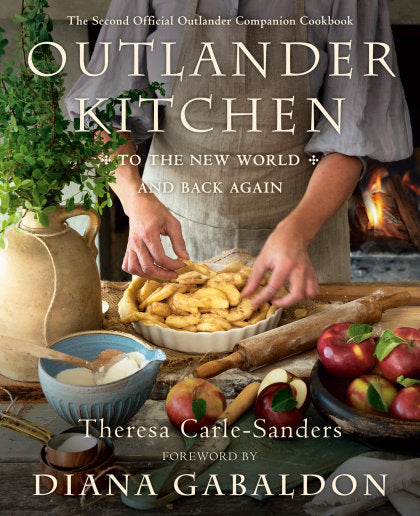
Outlander Kitchen: To the New World and Back Again
Outlander Kitchen: To the New World and Back Again
Couldn't load pickup availability
Collapsible content
ABOUT
“If you thought Scottish cuisine was all porridge and haggis washed down with a good swally of whiskey, Outlander Kitchen’s here to prove you wrong.”—Entertainment Weekly
With the discovery of a New World comes an explosion of culinary possibilities. The later novels in Diana Gabaldon’s Outlander series and the Lord John Grey series have Jamie, Claire, Lord John, and friends embark on their revolutionary adventures across the Atlantic and back again—and with their voyages come hundreds of new mouthwatering flavors to entice the taste buds of even the most discerning palates.
Professional chef and founder of Outlander Kitchen, Theresa Carle-Sanders returns with another hallmark cookbook—one that dexterously adapts traditional recipes for hungry, modern appetites. Interpreted with a spirit of generous humor and joyous adventure, the recipes herein are a mixture of authentic old-worldreceipts from Scottish settlers, new-world adaptations inspired by the cuisine of indigenous peoples, and humorously delicious character-inspired dishes—all created to satisfy your hunger and insatiable craving for everything Outlander, and with the modern kitchen in mind:
• Breakfast: Mrs. Figg’s Flapjacks; Simon Fraser’s Grits with Honey
• Soups: Leek and Potato Soup with Harry Quarry; Annie MacDonald’s Chicken Noodle Soup
• Appetizers: Cheese Savories; Sardines on Toast for Lady Joffrey
• Mains: Benedicta’s Steak and Mushroom Pie; The Cheerful Chicken’s Poulet au Miel
Pork Tenderloin with Cider Sauce and German Fried Potatoes; Claire’s Beans and Sass
• Sides: Tobias Quinn’s Colcannon; Fried Plantains; Corn Bread and Salt Pork Stuffing
• Breads: John Grey’s Yorkshire Pudding; Corn Bread; Scones with Preserved Lemon
• Sweets: Mistress Abernathy’s Apple Pandowdy; Oliebollen; Almond Biscuits
With vivid, full-color photographs and a plethora of extras—including preserves, condiments, cocktails, and pantry basics—Outlander Kitchen: To the New World and Back Again is the highly anticipated follow-up to the immersive culinary experience that inspired thousands of Outlander fans to discover and embrace their inner chefs!
Ith gu leòir! Or, bon appétit!
STANDARD, PRIMARY, DM AND VARIANT COVERS
Standard and Primary covers are widely available through general retailers. They often have higher print runs and can be cheaper, especially during sales.
In contrast, Direct Market (DM) and variant covers are primarily sold in comic shops. DM editions tend to have more limited availability and may be more valuable to collectors.
The main differences lie in artwork style, availability, price, and collector appeal. Ultimately, the choice between standard and variant covers depends on personal preference, budget, and individual collecting goals.
PRODUCT TYPES
Comic book enthusiasts have various formats to choose from when collecting their favorite stories.
Here's a brief overview of the main types:
Omnibus
- Large, hardcover collections
- Usually contain complete runs or extensive story arcs
- Typically 800-1000+ pages
- Higher price point, often €100-€150
Oversized Hardcover (OHC)
- Similar dimensions to omnibus, but thinner
- Collect shorter runs or story arcs
- Usually 300-600 pages
- Priced between €30-€50
Hardcover (HC)
- Standard-sized hardcover books
- Collect 6-12 issues typically
- Similar dimensions to single issues, but with a hard cover
- Priced around €25-€35
Trade Paperback (TP)
- Softcover collections
- Standard comic book size
- Usually collect 4-6 issues
- Most affordable option, typically €15-€25
Other Formats
- Absolute Editions: Oversized, deluxe hardcovers (mainly DC Comics)
- Compendiums: Massive paperback collections
- Graphic Novels (OGN/GN): Original stories not previously released as single issues
The choice between these formats often depends on personal preference, budget, and collecting goals. Omnibus and OHC editions offer larger artwork and more content but at a higher price, while TPs provide a more affordable way to collect complete story arcs