

Knopf Doubleday Publishing Group
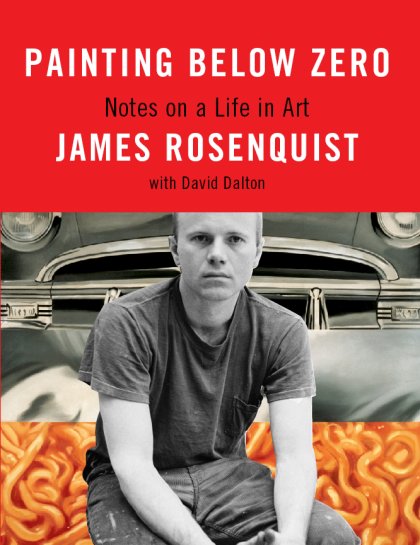
Painting Below Zero
Painting Below Zero
Couldn't load pickup availability
Collapsible content
ABOUT
Ronsequist writes about growing up in a tight-knit community of Scandinavian farmers in North Dakota and Minnesota in the late 1930s and early 1940s; about his mother, who was not only an amateur painter but, along with his father, a passionate aviator; and about leaving that flat midwestern landscape in 1955 for New York, where he had won a scholarship to the Art Students League. George Grosz, Edwin Dickinson, and Robert Beverly Hale were among his teachers, but his early life was a struggle until he discovered sign painting. He describes days suspended on scaffolding high over Broadway, painting movie or theater billboards, and nights at the Cedar Tavern with Willem de Kooning, Franz Kline, and the poet LeRoi Jones. His first major studio, on Coenties Slip, was in the thick of the new art world. Among his neighbors were Ellsworth Kelly, Robert Indiana, Agnes Martin, and Jack Youngerman, and his mentors Robert Rauschenberg and Jasper Johns.
Rosenquist writes about his shows with the dealers Richard Bellamy, Ileana Sonnabend, and Leo Castelli, and about colorful collectors like Robert and Ethel Scull. We learn about the 1971 car crash that left his wife and son in a coma and his own life and work in shambles, his lobbying—along with Rauschenberg—for artists’ rights in Washington D.C., and how he got his work back on track.
With his distinct voice, Roseqnuist writes about the ideas behind some of his major paintings, from the startling revelation that led to his first pop painting, Zone, to his masterpiece, F-III, a stunning critique of war and consumerism, to the cosmic reverie of Star Thief.
This is James Rosenquist’s story in his own words—captivating and unexpected, a unique look inside the contemporary art world in the company of one of its most important painters.
STANDARD, PRIMARY, DM AND VARIANT COVERS
Standard and Primary covers are widely available through general retailers. They often have higher print runs and can be cheaper, especially during sales.
In contrast, Direct Market (DM) and variant covers are primarily sold in comic shops. DM editions tend to have more limited availability and may be more valuable to collectors.
The main differences lie in artwork style, availability, price, and collector appeal. Ultimately, the choice between standard and variant covers depends on personal preference, budget, and individual collecting goals.
PRODUCT TYPES
Comic book enthusiasts have various formats to choose from when collecting their favorite stories.
Here's a brief overview of the main types:
Omnibus
- Large, hardcover collections
- Usually contain complete runs or extensive story arcs
- Typically 800-1000+ pages
- Higher price point, often €100-€150
Oversized Hardcover (OHC)
- Similar dimensions to omnibus, but thinner
- Collect shorter runs or story arcs
- Usually 300-600 pages
- Priced between €30-€50
Hardcover (HC)
- Standard-sized hardcover books
- Collect 6-12 issues typically
- Similar dimensions to single issues, but with a hard cover
- Priced around €25-€35
Trade Paperback (TP)
- Softcover collections
- Standard comic book size
- Usually collect 4-6 issues
- Most affordable option, typically €15-€25
Other Formats
- Absolute Editions: Oversized, deluxe hardcovers (mainly DC Comics)
- Compendiums: Massive paperback collections
- Graphic Novels (OGN/GN): Original stories not previously released as single issues
The choice between these formats often depends on personal preference, budget, and collecting goals. Omnibus and OHC editions offer larger artwork and more content but at a higher price, while TPs provide a more affordable way to collect complete story arcs