

Clarkson Potter/Ten Speed
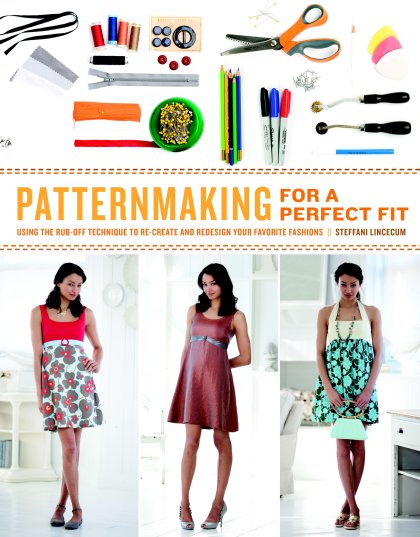
Patternmaking for a Perfect Fit
Patternmaking for a Perfect Fit
Couldn't load pickup availability
Collapsible content
ABOUT
Do you love to sew your own clothes but find it difficult to make commercial patterns fit? Has your favorite blouse seen better days but is no longer available in stores? Have you gained or lost weight so that your most flattering skirt doesn’t fit quite right, or would you like to update it by remaking it in a new fabric or adding new details? If you answered “yes” to any of these questions, you’ll find the solution right in your own closet—by creating customized sewing patterns using garments you already own and love to wear.
In Patternmaking for a Perfect Fit, Hollywood and theater costume designer Steffani Lincecum demonstrates the rub-off, a method of pattern drafting used by fashion and costume industry professionals that traces an existing garment or accessory without deconstructing or damaging it. Steffani starts with the basics, outlining two rub-off methods—tracing onto paper or draping with fabric—and explaining essential tools, materials, and sewing techniques. She then shows how to duplicate a skirt, a dress, a blouse, and a handbag, from rubbing-off the original, to creating the pattern, to cutting and sewing the new version, to making adjustments and incorporating a variety of other elements and details—not only refreshing your favorite fashions but replenishing your whole wardrobe with brand-new looks.
STANDARD, PRIMARY, DM AND VARIANT COVERS
Standard and Primary covers are widely available through general retailers. They often have higher print runs and can be cheaper, especially during sales.
In contrast, Direct Market (DM) and variant covers are primarily sold in comic shops. DM editions tend to have more limited availability and may be more valuable to collectors.
The main differences lie in artwork style, availability, price, and collector appeal. Ultimately, the choice between standard and variant covers depends on personal preference, budget, and individual collecting goals.
PRODUCT TYPES
Comic book enthusiasts have various formats to choose from when collecting their favorite stories.
Here's a brief overview of the main types:
Omnibus
- Large, hardcover collections
- Usually contain complete runs or extensive story arcs
- Typically 800-1000+ pages
- Higher price point, often €100-€150
Oversized Hardcover (OHC)
- Similar dimensions to omnibus, but thinner
- Collect shorter runs or story arcs
- Usually 300-600 pages
- Priced between €30-€50
Hardcover (HC)
- Standard-sized hardcover books
- Collect 6-12 issues typically
- Similar dimensions to single issues, but with a hard cover
- Priced around €25-€35
Trade Paperback (TP)
- Softcover collections
- Standard comic book size
- Usually collect 4-6 issues
- Most affordable option, typically €15-€25
Other Formats
- Absolute Editions: Oversized, deluxe hardcovers (mainly DC Comics)
- Compendiums: Massive paperback collections
- Graphic Novels (OGN/GN): Original stories not previously released as single issues
The choice between these formats often depends on personal preference, budget, and collecting goals. Omnibus and OHC editions offer larger artwork and more content but at a higher price, while TPs provide a more affordable way to collect complete story arcs