

Crown
Paul Newman
Paul Newman
Couldn't load pickup availability
Collapsible content
ABOUT
“A graceful tribute to a one-of-a-kind man.”—The Seattle Times
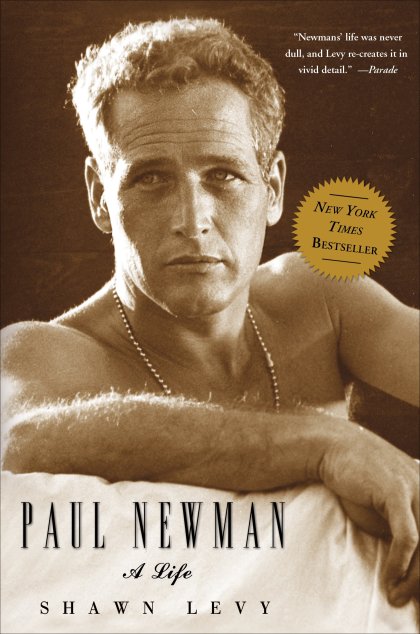
“Newman’s life was never dull, and Levy re-creates it in vivid detail.”—Parade
Paul Newman, the Oscar-winning actor with the legendary blue eyes, achieved superstar status by playing charismatic renegades, broken heroes, and winsome antiheroes in such revered films as The Hustler, Cool Hand Luke, Butch Cassidy and the Sundance Kid, The Verdict, The Color of Money, and Nobody’s Fool. But Newman was also an oddity in Hollywood: the rare box-office titan who cared about the craft of acting, the sexy leading man known for the staying power of his marriage, and the humble celebrity who made philanthropy his calling card long before it was cool.
Unlike his father, a successful entrepreneur, Newman bypassed the family sporting goods business to pursue an acting career. After struggling as a theater and television actor, Newman landed the lead role of boxer Rocky Graziano in Somebody Up There Likes Me when, in a tragic twist of fate, James Dean was killed in a car accident. Part of the original Actors Studio generation, Newman demanded a high level of rigor and clarity from every project. The artistic battles that nearly derailed his early movie career would pay off handsomely at the box office and earn him critical acclaim.
He applied that tenacity to every endeavor both on and off the set. The outspoken Newman used his celebrity to call attention to political causes dear to his heart, including civil rights and nuclear proliferation. Taking up auto racing in midlife, Newman became the oldest driver to ever win a major professional auto race. A food enthusiast who would dress his own salads in restaurants, he launched the Newman’s Own brand dedicated to fresh ingredients, a nonprofit juggernaut that has generated more than $250 million for charity.
In Paul Newman: A Life, Shawn Levy gives readers the ultimate behind-the-scenes examination of the actor’s life, from his merry pranks on the set to his lasting romance with Joanne Woodward to the devastating impact of his son’s death from a drug overdose. This expansive biography is a portrait of an extraordinarily gifted man who gave back as much as he got out of life—and just happened to be one of the most celebrated movie stars of the twentieth century.
STANDARD, PRIMARY, DM AND VARIANT COVERS
Standard and Primary covers are widely available through general retailers. They often have higher print runs and can be cheaper, especially during sales.
In contrast, Direct Market (DM) and variant covers are primarily sold in comic shops. DM editions tend to have more limited availability and may be more valuable to collectors.
The main differences lie in artwork style, availability, price, and collector appeal. Ultimately, the choice between standard and variant covers depends on personal preference, budget, and individual collecting goals.
PRODUCT TYPES
Comic book enthusiasts have various formats to choose from when collecting their favorite stories.
Here's a brief overview of the main types:
Omnibus
- Large, hardcover collections
- Usually contain complete runs or extensive story arcs
- Typically 800-1000+ pages
- Higher price point, often €100-€150
Oversized Hardcover (OHC)
- Similar dimensions to omnibus, but thinner
- Collect shorter runs or story arcs
- Usually 300-600 pages
- Priced between €30-€50
Hardcover (HC)
- Standard-sized hardcover books
- Collect 6-12 issues typically
- Similar dimensions to single issues, but with a hard cover
- Priced around €25-€35
Trade Paperback (TP)
- Softcover collections
- Standard comic book size
- Usually collect 4-6 issues
- Most affordable option, typically €15-€25
Other Formats
- Absolute Editions: Oversized, deluxe hardcovers (mainly DC Comics)
- Compendiums: Massive paperback collections
- Graphic Novels (OGN/GN): Original stories not previously released as single issues
The choice between these formats often depends on personal preference, budget, and collecting goals. Omnibus and OHC editions offer larger artwork and more content but at a higher price, while TPs provide a more affordable way to collect complete story arcs