

Random House Publishing Group
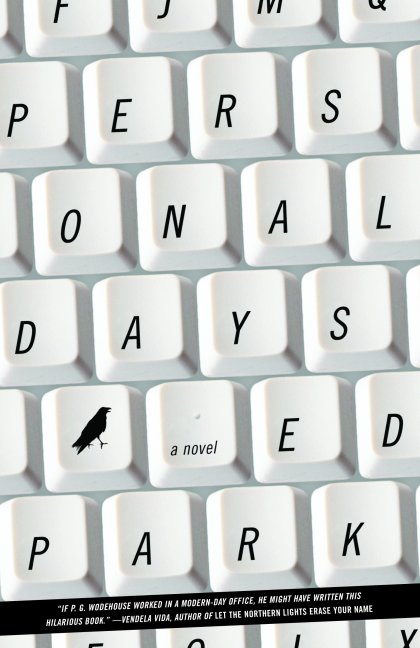
Personal Days
Personal Days
Couldn't load pickup availability
Collapsible content
ABOUT
On a Sunday, one of them is called at home. And the Firings begin.
Rich with Orwellian doublespeak, filled with sabotage and romance, this astonishing literary debut is at once a comic delight and a narrative tour de force. It’s a novel for anyone who has ever worked in an office and wondered: “Where does the time go? Where does the life go? And whose banana is in the fridge?”
Praise for PERSONAL DAYS
"Witty and appealing...Anyone who has ever groaned to hear 'impact' used as a verb will cheer as Park skewers the avatars of corporate speak, hellbent on debasing the language....Park has written what one of his characters calls 'a layoff narrative' for our times. As the economy continues its free fall, Park's book may serve as a handy guide for navigating unemployment and uncertainty. Does anyone who isn't a journalist think there can't be two books on the same subject at the same time? We need as many as we can get right now." —The New York Times Book Review
"Never have the minutiae of office life been so lovingly cataloged and collated." —"Three First Novels that Just Might Last," —Time
A "comic and creepy début...Park transforms the banal into the eerie, rendering ominous the familiar request "Does anyone want anything from the outside world?" —The New Yorker
"The modern corporate office is to Ed Park's debut novel Personal Days what World War II was to Joseph Heller's Catch-22—a theater of absurdity and injustice so profound as to defy all reason....Park may be in line to fill the shoes left by Kurt Vonnegut and other satirists par excellence."—Samantha Dunn, Los Angeles Times
"In Personal Days Ed Park has crafted a sometimes funny, sometimes heartbreaking, but always adroit novel about office life...Sharp and lovely language." —Newsweek
"A warm and winning fiction debut." — Publishers Weekly
"I laughed until they put me in a mental hospital. But Personal Days is so much more than satire. Underneath Park's masterly portrait of wasted workaday lives is a pulsating heart, and an odd, buoyant hope." — Gary Shteyngart, author of Absurdistan
"The funniest book I've read about the way we work now." –William Poundstone, author of Fortune's Formula
"Ed Park joins Andy Warhol and Don DeLillo as a master of the deadpan vernacular." —Helen DeWitt, author of The Last Samurai
STANDARD, PRIMARY, DM AND VARIANT COVERS
Standard and Primary covers are widely available through general retailers. They often have higher print runs and can be cheaper, especially during sales.
In contrast, Direct Market (DM) and variant covers are primarily sold in comic shops. DM editions tend to have more limited availability and may be more valuable to collectors.
The main differences lie in artwork style, availability, price, and collector appeal. Ultimately, the choice between standard and variant covers depends on personal preference, budget, and individual collecting goals.
PRODUCT TYPES
Comic book enthusiasts have various formats to choose from when collecting their favorite stories.
Here's a brief overview of the main types:
Omnibus
- Large, hardcover collections
- Usually contain complete runs or extensive story arcs
- Typically 800-1000+ pages
- Higher price point, often €100-€150
Oversized Hardcover (OHC)
- Similar dimensions to omnibus, but thinner
- Collect shorter runs or story arcs
- Usually 300-600 pages
- Priced between €30-€50
Hardcover (HC)
- Standard-sized hardcover books
- Collect 6-12 issues typically
- Similar dimensions to single issues, but with a hard cover
- Priced around €25-€35
Trade Paperback (TP)
- Softcover collections
- Standard comic book size
- Usually collect 4-6 issues
- Most affordable option, typically €15-€25
Other Formats
- Absolute Editions: Oversized, deluxe hardcovers (mainly DC Comics)
- Compendiums: Massive paperback collections
- Graphic Novels (OGN/GN): Original stories not previously released as single issues
The choice between these formats often depends on personal preference, budget, and collecting goals. Omnibus and OHC editions offer larger artwork and more content but at a higher price, while TPs provide a more affordable way to collect complete story arcs