

Clarkson Potter/Ten Speed
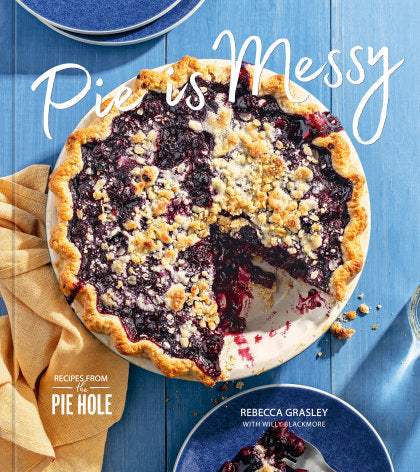
Pie is Messy
Pie is Messy
Couldn't load pickup availability
Collapsible content
ABOUT
In Pie Is Messy, Rebecca Grasley shares how she chased her dream of opening a California pie shop after retiring from a lifetime of nursing and factory work on the East Coast. Trading in the gingham curtains and cozy vibes of rural Pennsylvania for the industrial, tattoo-splattered Los Angeles Arts District, she set up shop with her son and his restaurant friend, marrying the traditional pies Becky learned to make from her grandmother with funky, irreverent flavors inspired by the new generation. In 2011, The Pie Hole was born—and it was a hit.
Now Becky is ready to share the pie gospel with home cooks everywhere, beginning with abandoning the idea of perfection. Pie is, after all, messy! Through 100 recipes, Pie is Messy takes readers from the basics of making crust to preparing contemporary hits from The Pie Hole. Each chapter covers a different category of pie and is broken down into two sections: Old School Pies and New School Pies. In the chapter Fruit Pies you’ll find Old School Pies such as Blue Ribbon Apple Pie, Cherry Pie, and Lemon-Pear Pie and New School Pies such as Candied Lemon Chess Pie, Drunken Plum Frangipane Tart, and Vegan Blackberry-Mango Galette. The structure of each chapter allows you to learn the basics through classic recipes, and then see how they can be adapted and updated with more contemporary flavors and techniques.
Becky also shares stories from life creating pie recipes at The Pie Hole and from generations of her pie-loving family. In addition, she offers tutorials for all possible crust variations, tips and tricks for gussying up your pie’s presentation, and making substitutions for vegan or gluten-free options.
Pie Is Messy is beginner friendly, warm, and non-intimidating, and creative enough for more advanced bakers. So roll up your sleeves, grab your pie tins, and prepare to get messy!
STANDARD, PRIMARY, DM AND VARIANT COVERS
Standard and Primary covers are widely available through general retailers. They often have higher print runs and can be cheaper, especially during sales.
In contrast, Direct Market (DM) and variant covers are primarily sold in comic shops. DM editions tend to have more limited availability and may be more valuable to collectors.
The main differences lie in artwork style, availability, price, and collector appeal. Ultimately, the choice between standard and variant covers depends on personal preference, budget, and individual collecting goals.
PRODUCT TYPES
Comic book enthusiasts have various formats to choose from when collecting their favorite stories.
Here's a brief overview of the main types:
Omnibus
- Large, hardcover collections
- Usually contain complete runs or extensive story arcs
- Typically 800-1000+ pages
- Higher price point, often €100-€150
Oversized Hardcover (OHC)
- Similar dimensions to omnibus, but thinner
- Collect shorter runs or story arcs
- Usually 300-600 pages
- Priced between €30-€50
Hardcover (HC)
- Standard-sized hardcover books
- Collect 6-12 issues typically
- Similar dimensions to single issues, but with a hard cover
- Priced around €25-€35
Trade Paperback (TP)
- Softcover collections
- Standard comic book size
- Usually collect 4-6 issues
- Most affordable option, typically €15-€25
Other Formats
- Absolute Editions: Oversized, deluxe hardcovers (mainly DC Comics)
- Compendiums: Massive paperback collections
- Graphic Novels (OGN/GN): Original stories not previously released as single issues
The choice between these formats often depends on personal preference, budget, and collecting goals. Omnibus and OHC editions offer larger artwork and more content but at a higher price, while TPs provide a more affordable way to collect complete story arcs