

Random House Publishing Group
Plum Bun
Plum Bun
Couldn't load pickup availability
Collapsible content
ABOUT
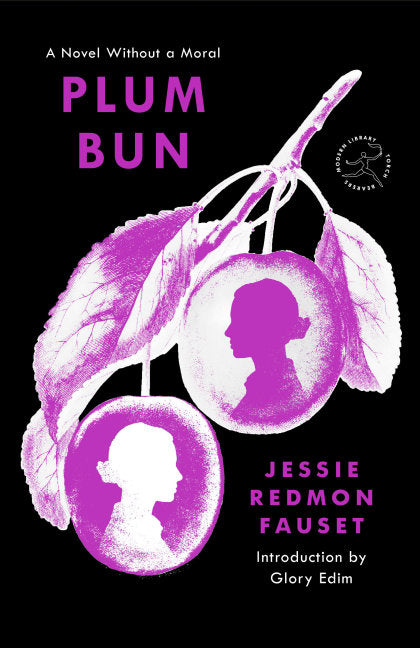
Jessie Redmon Fauset is one of the literary titans and foremost tastemakers of the Harlem Renaissance—hired by W. E. B. Du Bois to edit The Crisis, she helped popularize writers like Nella Larsen, Claude McKay, Langston Hughes, amongst countless others. And yet, her own work has been largely underread in the twenty-first century. Written in 1929, at the height of the Harlem renaissance, Fauset’s celebrated second novel tells the story of Angela Murray.
Growing up in a Black middle-class Philadelphia neighborhood, Angela has always dreamed of becoming a painter. But the profession is largely reserved for white society. So when Angela’s parents prematurely pass away, she moves to roaring New York City, where she befriends elite artists and presents herself as a white woman. While her sister Virginia’s complexion resembles that of their father’s, Angela’s is lighter, like her mother’s, and passing, she believes, is the only way she’ll ever achieve success. Virginia, meanwhile, refuses to bow to racist pressures, and stays in Philadelphia to embrace her heritage with pride.
Each time Angela thinks she’s found artistic, professional, and romantic fulfillment, her ethnicity gets exposed and she finds herself stripped of everything she cares about. As she navigates a world of seduction, betrayal, lust, and heartbreak, she’s forced to consider: What does it mean to find genuine success in a society marred by injustice? Fauset’s “novel without morals” never passes judgement and stays teeming with tenderness. Full of moments that underline the joy of every day Black life, Plum Bun is a pertinent meditation on art, identity, and what it means to find community—as relevant today as ever before.
STANDARD, PRIMARY, DM AND VARIANT COVERS
Standard and Primary covers are widely available through general retailers. They often have higher print runs and can be cheaper, especially during sales.
In contrast, Direct Market (DM) and variant covers are primarily sold in comic shops. DM editions tend to have more limited availability and may be more valuable to collectors.
The main differences lie in artwork style, availability, price, and collector appeal. Ultimately, the choice between standard and variant covers depends on personal preference, budget, and individual collecting goals.
PRODUCT TYPES
Comic book enthusiasts have various formats to choose from when collecting their favorite stories.
Here's a brief overview of the main types:
Omnibus
- Large, hardcover collections
- Usually contain complete runs or extensive story arcs
- Typically 800-1000+ pages
- Higher price point, often €100-€150
Oversized Hardcover (OHC)
- Similar dimensions to omnibus, but thinner
- Collect shorter runs or story arcs
- Usually 300-600 pages
- Priced between €30-€50
Hardcover (HC)
- Standard-sized hardcover books
- Collect 6-12 issues typically
- Similar dimensions to single issues, but with a hard cover
- Priced around €25-€35
Trade Paperback (TP)
- Softcover collections
- Standard comic book size
- Usually collect 4-6 issues
- Most affordable option, typically €15-€25
Other Formats
- Absolute Editions: Oversized, deluxe hardcovers (mainly DC Comics)
- Compendiums: Massive paperback collections
- Graphic Novels (OGN/GN): Original stories not previously released as single issues
The choice between these formats often depends on personal preference, budget, and collecting goals. Omnibus and OHC editions offer larger artwork and more content but at a higher price, while TPs provide a more affordable way to collect complete story arcs