

Penguin Publishing Group
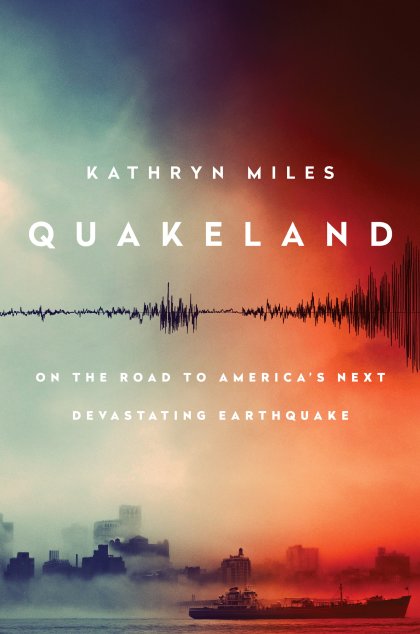
Quakeland
Quakeland
Couldn't load pickup availability
Collapsible content
ABOUT
Earthquakes. You need to worry about them only if you’re in San Francisco, right? Wrong. We have been making enormous changes to subterranean America, and Mother Earth, as always, has been making some of her own. . . . The consequences for our real estate, our civil engineering, and our communities will be huge because they will include earthquakes most of us do not expect and cannot imagine—at least not without reading Quakeland. Kathryn Miles descends into mines in the Northwest, dissects Mississippi levee engineering studies, uncovers the horrific risks of an earthquake in the Northeast, and interviews the seismologists, structual engineers, and emergency managers around the country who are addressing this ground shaking threat.
As Miles relates, the era of human-induced earthquakes began in 1962 in Colorado after millions of gallons of chemical-weapon waste was pumped underground in the Rockies. More than 1,500 quakes over the following seven years resulted. The Department of Energy plans to dump spent nuclear rods in the same way. Evidence of fracking’s seismological impact continues to mount. . . . Humans as well as fault lines built our “quakeland”.
What will happen when Memphis, home of FedEx's 1.5-million-packages-a-day hub, goes offline as a result of an earthquake along the unstable Reelfoot Fault? FEMA has estimated that a modest 7.0 magnitude quake (twenty of these happen per year around the world) along the Wasatch Fault under Salt Lake City would put a $33 billion dent in our economy. When the Fukushima reactor melted down, tens of thousands were displaced. If New York’s Indian Point nuclear power plant blows, ten million people will be displaced. How would that evacuation even begin?
Kathryn Miles’ tour of our land is as fascinating and frightening as it is irresistibly compelling.
STANDARD, PRIMARY, DM AND VARIANT COVERS
Standard and Primary covers are widely available through general retailers. They often have higher print runs and can be cheaper, especially during sales.
In contrast, Direct Market (DM) and variant covers are primarily sold in comic shops. DM editions tend to have more limited availability and may be more valuable to collectors.
The main differences lie in artwork style, availability, price, and collector appeal. Ultimately, the choice between standard and variant covers depends on personal preference, budget, and individual collecting goals.
PRODUCT TYPES
Comic book enthusiasts have various formats to choose from when collecting their favorite stories.
Here's a brief overview of the main types:
Omnibus
- Large, hardcover collections
- Usually contain complete runs or extensive story arcs
- Typically 800-1000+ pages
- Higher price point, often €100-€150
Oversized Hardcover (OHC)
- Similar dimensions to omnibus, but thinner
- Collect shorter runs or story arcs
- Usually 300-600 pages
- Priced between €30-€50
Hardcover (HC)
- Standard-sized hardcover books
- Collect 6-12 issues typically
- Similar dimensions to single issues, but with a hard cover
- Priced around €25-€35
Trade Paperback (TP)
- Softcover collections
- Standard comic book size
- Usually collect 4-6 issues
- Most affordable option, typically €15-€25
Other Formats
- Absolute Editions: Oversized, deluxe hardcovers (mainly DC Comics)
- Compendiums: Massive paperback collections
- Graphic Novels (OGN/GN): Original stories not previously released as single issues
The choice between these formats often depends on personal preference, budget, and collecting goals. Omnibus and OHC editions offer larger artwork and more content but at a higher price, while TPs provide a more affordable way to collect complete story arcs