

Penguin Publishing Group
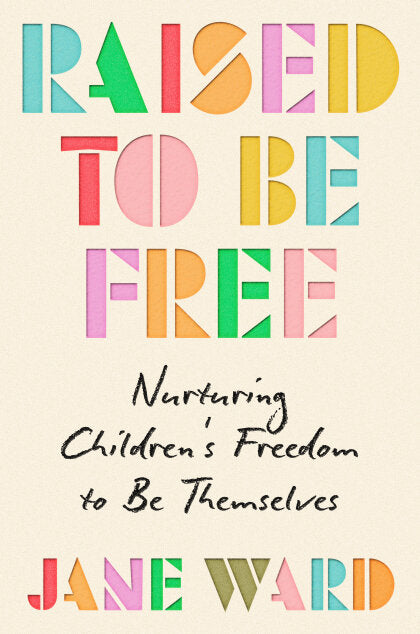
Raised to Be Free
Raised to Be Free
Couldn't load pickup availability
Collapsible content
ABOUT
In a culture increasingly preoccupied with controlling, categorizing, and correcting young people, children are often denied the freedom to define themselves on their own terms. From rigid ideas about gender and sexuality to growing calls for more authoritarian approaches to parenting, adults too often place limits on children’s autonomy, creativity, and self-determination.
In Raised to Be Free, acclaimed scholar and queer parent Jane Ward offers a bold new vision for raising—and relating to—children. Drawing on queer and trans politics, feminist thought, and her own experience as a parent, Ward introduces the philosophy of "queer parenting": an approach that challenges the assumptions adults bring to childhood and places children’s freedom at its center.
Queer parenting is not about a parent or child's sexual orientation or gender identity. It is a practice available to anyone who believes children deserve the space to become themselves. It asks adults to resist premature labels, question rigid ideas about gender and sexuality, and build relationships rooted in respect, curiosity, and care.
At the heart of queer parenting are four key principles:
- Embracing children’s natural queerness in the broadest sense of the word—their uniqueness, creativity, and capacity to surprise us
- Resisting the impulse to define a child’s gender for them, allowing them space to determine their own identity
- Refusing to impose adult assumptions about sexuality onto children’s interests, relationships, and forms of self-expression
- Modeling feminist, equitable relationships that teach children how to care for one another and the world around them
Raised to Be Free is more than a parenting guide. It is a powerful argument for protecting children from violence, diminishment, and the forces that seek to constrain who they can become. At a time when many adults argue that children need more control and discipline, Ward makes a compelling case for freedom, dignity, and self-determination.
Provocative, compassionate, and deeply original, Raised to Be Free offers a transformative vision of parenting—and a hopeful roadmap for anyone committed to building a more just world for children.
STANDARD, PRIMARY, DM AND VARIANT COVERS
Standard and Primary covers are widely available through general retailers. They often have higher print runs and can be cheaper, especially during sales.
In contrast, Direct Market (DM) and variant covers are primarily sold in comic shops. DM editions tend to have more limited availability and may be more valuable to collectors.
The main differences lie in artwork style, availability, price, and collector appeal. Ultimately, the choice between standard and variant covers depends on personal preference, budget, and individual collecting goals.
PRODUCT TYPES
Comic book enthusiasts have various formats to choose from when collecting their favorite stories.
Here's a brief overview of the main types:
Omnibus
- Large, hardcover collections
- Usually contain complete runs or extensive story arcs
- Typically 800-1000+ pages
- Higher price point, often €100-€150
Oversized Hardcover (OHC)
- Similar dimensions to omnibus, but thinner
- Collect shorter runs or story arcs
- Usually 300-600 pages
- Priced between €30-€50
Hardcover (HC)
- Standard-sized hardcover books
- Collect 6-12 issues typically
- Similar dimensions to single issues, but with a hard cover
- Priced around €25-€35
Trade Paperback (TP)
- Softcover collections
- Standard comic book size
- Usually collect 4-6 issues
- Most affordable option, typically €15-€25
Other Formats
- Absolute Editions: Oversized, deluxe hardcovers (mainly DC Comics)
- Compendiums: Massive paperback collections
- Graphic Novels (OGN/GN): Original stories not previously released as single issues
The choice between these formats often depends on personal preference, budget, and collecting goals. Omnibus and OHC editions offer larger artwork and more content but at a higher price, while TPs provide a more affordable way to collect complete story arcs