

Beacon Press
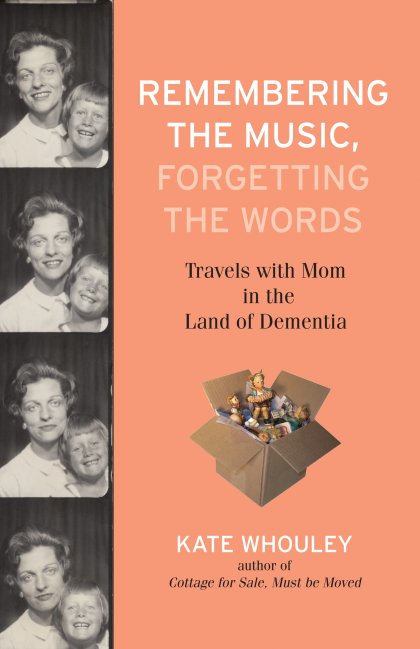
Remembering the Music, Forgetting the Words
Remembering the Music, Forgetting the Words
Couldn't load pickup availability
Collapsible content
ABOUT
In Remembering the Music, Forgetting the Words, Kate Whouley strips away the romantic veneer of mother-daughter love to bare the toothed and tough reality of caring for a parent who is slowly losing her mind. Yet, this is not a dark or dour look at the demon of Alzheimer’s. Whouley shares the trying, the tender, and the sometimes hilarious moments in meeting the challenge also known as Mom.
As her mother, Anne, falls into forgetting, Kate remembers for her. In Anne we meet a strong-minded, accidental feminist with a weakness for unreliable men. The first woman to apply for—and win—a department-head position in her school system, Anne was an innovative educator who poured her passion into her work. House-proud too, she made certain her Hummel figurines were dusted and arranged just so. But as her memory falters, so does her housekeeping. Surrounded by stacks of dirty dishes, piles of laundry, and months of unopened mail, Anne needs Kate’s help—but she doesn’t want to relinquish her hard-won independence any more than she wants to give up smoking.
Time and time again, Kate must balance Anne’s often nonsensical demands with what she believes are the best decisions for her mother’s comfort and safety. This is familiar territory for anyone who has had to help a loved one in decline, but Kate finds new and different ways to approach her mother and her forgetting. Shuddering under the weight of accumulating bills and her mother’s frustrating, circular arguments, Kate realizes she must push past difficult family history to find compassion, empathy, and good humor.
When the memories, the names, and then the words begin to fade, it is the music that matters most to Kate’s mother. Holding hands after a concert, a flute case slung over Kate’s shoulder, and a shared joke between them, their relationship is healed—even in the face of a dreaded and deadly diagnosis. “Memory,” Kate Whouley writes, “is overrated.”
STANDARD, PRIMARY, DM AND VARIANT COVERS
Standard and Primary covers are widely available through general retailers. They often have higher print runs and can be cheaper, especially during sales.
In contrast, Direct Market (DM) and variant covers are primarily sold in comic shops. DM editions tend to have more limited availability and may be more valuable to collectors.
The main differences lie in artwork style, availability, price, and collector appeal. Ultimately, the choice between standard and variant covers depends on personal preference, budget, and individual collecting goals.
PRODUCT TYPES
Comic book enthusiasts have various formats to choose from when collecting their favorite stories.
Here's a brief overview of the main types:
Omnibus
- Large, hardcover collections
- Usually contain complete runs or extensive story arcs
- Typically 800-1000+ pages
- Higher price point, often €100-€150
Oversized Hardcover (OHC)
- Similar dimensions to omnibus, but thinner
- Collect shorter runs or story arcs
- Usually 300-600 pages
- Priced between €30-€50
Hardcover (HC)
- Standard-sized hardcover books
- Collect 6-12 issues typically
- Similar dimensions to single issues, but with a hard cover
- Priced around €25-€35
Trade Paperback (TP)
- Softcover collections
- Standard comic book size
- Usually collect 4-6 issues
- Most affordable option, typically €15-€25
Other Formats
- Absolute Editions: Oversized, deluxe hardcovers (mainly DC Comics)
- Compendiums: Massive paperback collections
- Graphic Novels (OGN/GN): Original stories not previously released as single issues
The choice between these formats often depends on personal preference, budget, and collecting goals. Omnibus and OHC editions offer larger artwork and more content but at a higher price, while TPs provide a more affordable way to collect complete story arcs