

Crown
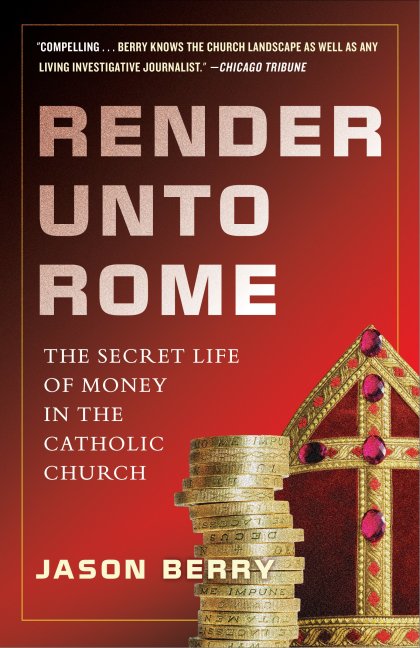
Render Unto Rome
Render Unto Rome
Couldn't load pickup availability
Collapsible content
ABOUT
The Sunday collection in every Catholic church throughout the world is as familiar a part of the Mass as the homily and even Communion. There is no doubt that historically the Catholic Church has been one of the great engines of charity in history. But once a dollar is dropped in that basket, where does it go? How are weekly cash contributions that can amount to tens of thousands of dollars accounted for? Where does the money go when a diocese sells a church property for tens of millions of dollars? And what happens when hundreds of millions of dollars are turned over to officials at the highest ranks, no questions asked, for their discretionary use? The Roman Catholic Church is the largest organization in the world. The Vatican has never revealed its net worth, but the value of its works of art, great churches, property in Rome, and stocks held through its bank easily run into the tens of billions. Yet the Holy See as a sovereign state covers a mere 108 acres and has a small annual budget of about $280 million.
No major book has examined the church’s financial underpinnings and practices with such journalistic force. Today the church bears scrutiny by virtue of the vast amounts of money (nearly $2 billion in the United States alone) paid out to victims of clergy abuse. Amid mounting diocesan bankruptcies, bishops have been selling off whole pieces of the infrastructure—churches, schools, commercial properties—while the nephew of one of the Vatican’s most powerful cardinals engaged in a lucrative scheme to profiteer off the enormous downsizing of American church wealth.
STANDARD, PRIMARY, DM AND VARIANT COVERS
Standard and Primary covers are widely available through general retailers. They often have higher print runs and can be cheaper, especially during sales.
In contrast, Direct Market (DM) and variant covers are primarily sold in comic shops. DM editions tend to have more limited availability and may be more valuable to collectors.
The main differences lie in artwork style, availability, price, and collector appeal. Ultimately, the choice between standard and variant covers depends on personal preference, budget, and individual collecting goals.
PRODUCT TYPES
Comic book enthusiasts have various formats to choose from when collecting their favorite stories.
Here's a brief overview of the main types:
Omnibus
- Large, hardcover collections
- Usually contain complete runs or extensive story arcs
- Typically 800-1000+ pages
- Higher price point, often €100-€150
Oversized Hardcover (OHC)
- Similar dimensions to omnibus, but thinner
- Collect shorter runs or story arcs
- Usually 300-600 pages
- Priced between €30-€50
Hardcover (HC)
- Standard-sized hardcover books
- Collect 6-12 issues typically
- Similar dimensions to single issues, but with a hard cover
- Priced around €25-€35
Trade Paperback (TP)
- Softcover collections
- Standard comic book size
- Usually collect 4-6 issues
- Most affordable option, typically €15-€25
Other Formats
- Absolute Editions: Oversized, deluxe hardcovers (mainly DC Comics)
- Compendiums: Massive paperback collections
- Graphic Novels (OGN/GN): Original stories not previously released as single issues
The choice between these formats often depends on personal preference, budget, and collecting goals. Omnibus and OHC editions offer larger artwork and more content but at a higher price, while TPs provide a more affordable way to collect complete story arcs