

Crown
Rockonomics
Rockonomics
Couldn't load pickup availability
Collapsible content
ABOUT
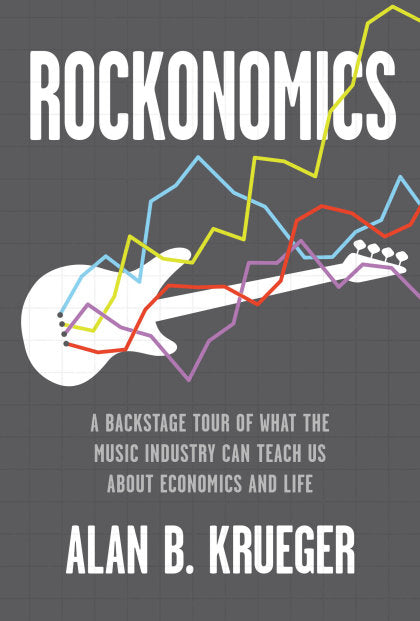
The music industry is a leading indicator of today's economy; it is among the first to be disrupted by the latest wave of technology, and examining the ins and outs of how musicians create and sell new songs and plan concert tours offers valuable lessons for what is in store for businesses and employees in other industries that are struggling to adapt.
Drawing on interviews with leading band members, music executives, managers, promoters, and using the latest data on revenues, royalties, streaming tour dates, and merchandise sales, Rockonomics takes readers backstage to show how the music industry really works--who makes money and how much, and how the economics of the music industry has undergone a radical transformation during recent decades.
Before digitalization and the ability to stream music over the Internet, rock stars made much of their income from record sales. Today, income from selling songs has plummeted, even for superstars like James Taylor and Taylor Swift. The real money nowadays is derived from concert sales. In 2017, for example, Billy Joel earned $27.4 million from his live performances, and less than $2 million from record sales and streaming. Even Paul McCartney, who has written and recorded more number one songs than anyone in music history, today, earns 80 percent of his income from live concerts. Krueger tackles commonly asked questions: How does a song become popular? And how does a new artist break out in today's winner-take-all economy? How can musicians and everyday workers earn a living in the digital economy?
STANDARD, PRIMARY, DM AND VARIANT COVERS
Standard and Primary covers are widely available through general retailers. They often have higher print runs and can be cheaper, especially during sales.
In contrast, Direct Market (DM) and variant covers are primarily sold in comic shops. DM editions tend to have more limited availability and may be more valuable to collectors.
The main differences lie in artwork style, availability, price, and collector appeal. Ultimately, the choice between standard and variant covers depends on personal preference, budget, and individual collecting goals.
PRODUCT TYPES
Comic book enthusiasts have various formats to choose from when collecting their favorite stories.
Here's a brief overview of the main types:
Omnibus
- Large, hardcover collections
- Usually contain complete runs or extensive story arcs
- Typically 800-1000+ pages
- Higher price point, often €100-€150
Oversized Hardcover (OHC)
- Similar dimensions to omnibus, but thinner
- Collect shorter runs or story arcs
- Usually 300-600 pages
- Priced between €30-€50
Hardcover (HC)
- Standard-sized hardcover books
- Collect 6-12 issues typically
- Similar dimensions to single issues, but with a hard cover
- Priced around €25-€35
Trade Paperback (TP)
- Softcover collections
- Standard comic book size
- Usually collect 4-6 issues
- Most affordable option, typically €15-€25
Other Formats
- Absolute Editions: Oversized, deluxe hardcovers (mainly DC Comics)
- Compendiums: Massive paperback collections
- Graphic Novels (OGN/GN): Original stories not previously released as single issues
The choice between these formats often depends on personal preference, budget, and collecting goals. Omnibus and OHC editions offer larger artwork and more content but at a higher price, while TPs provide a more affordable way to collect complete story arcs