

Crown
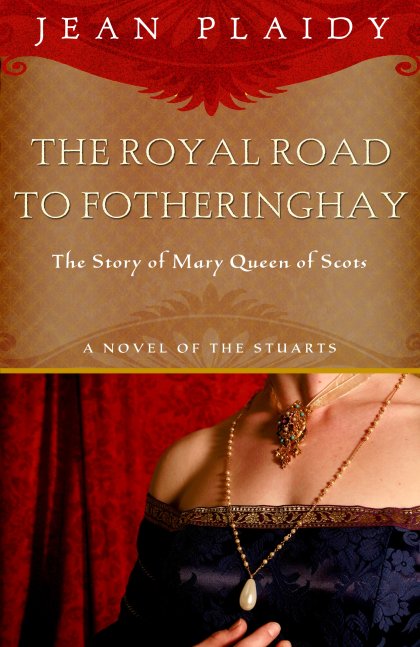
Royal Road to Fotheringhay
Royal Road to Fotheringhay
Couldn't load pickup availability
Collapsible content
ABOUT
Mary Stuart became Queen of Scotland at the tender age of six days old. Her French-born mother, the Queen Regent, knew immediately that the infant queen would be a vulnerable pawn in the power struggle between Scotland’s clans and nobles. So Mary was sent away from the land of her birth and raised in the sophisticated and glittering court of France. Unusually tall and slim, a writer of music and poetry, Mary was celebrated throughout Europe for her beauty and intellect. Married in her teens to the Dauphin François, she would become not only Queen of Scotland but Queen of France as well. But Mary’s happiness was short-lived. Her husband, always sickly, died after only two years on the throne, and there was no place for Mary in the court of the new king. At the age of twenty, she returned to Scotland, a place she barely knew.
Once home, the Queen of Scots discovered she was a stranger in her own country. She spoke only French and was a devout Catholic in a land of stern Presbyterians. Her nation was controlled by a quarrelsome group of lords, including her illegitimate half brother, the Earl of Moray, and by John Knox, a fire-and-brimstone Calvinist preacher, who denounced the young queen as a Papist and a whore. Mary eventually remarried, hoping to find a loving ally in the Scottish Lord Darnley. But Darnley proved violent and untrustworthy. When he died mysteriously, suspicion fell on Mary. In haste, she married Lord Bothwell, the prime suspect in her husband’s murder, a move that outraged all of Scotland. When her nobles rose against her, the disgraced Queen of Scots fled to England, hoping to be taken in by her cousin Elizabeth I. But Mary’s flight from Scotland led not to safety, but to Fotheringhay Castle.
STANDARD, PRIMARY, DM AND VARIANT COVERS
Standard and Primary covers are widely available through general retailers. They often have higher print runs and can be cheaper, especially during sales.
In contrast, Direct Market (DM) and variant covers are primarily sold in comic shops. DM editions tend to have more limited availability and may be more valuable to collectors.
The main differences lie in artwork style, availability, price, and collector appeal. Ultimately, the choice between standard and variant covers depends on personal preference, budget, and individual collecting goals.
PRODUCT TYPES
Comic book enthusiasts have various formats to choose from when collecting their favorite stories.
Here's a brief overview of the main types:
Omnibus
- Large, hardcover collections
- Usually contain complete runs or extensive story arcs
- Typically 800-1000+ pages
- Higher price point, often €100-€150
Oversized Hardcover (OHC)
- Similar dimensions to omnibus, but thinner
- Collect shorter runs or story arcs
- Usually 300-600 pages
- Priced between €30-€50
Hardcover (HC)
- Standard-sized hardcover books
- Collect 6-12 issues typically
- Similar dimensions to single issues, but with a hard cover
- Priced around €25-€35
Trade Paperback (TP)
- Softcover collections
- Standard comic book size
- Usually collect 4-6 issues
- Most affordable option, typically €15-€25
Other Formats
- Absolute Editions: Oversized, deluxe hardcovers (mainly DC Comics)
- Compendiums: Massive paperback collections
- Graphic Novels (OGN/GN): Original stories not previously released as single issues
The choice between these formats often depends on personal preference, budget, and collecting goals. Omnibus and OHC editions offer larger artwork and more content but at a higher price, while TPs provide a more affordable way to collect complete story arcs