

Diversified Publishing
Save What's Left
Save What's Left
Couldn't load pickup availability
Collapsible content
ABOUT
“Irreverent and unexpectedly tender, this story takes neighborhood feuding to new heights and finds beauty and reinvention in unlikely places." —Oprah Daily
"Brings a tongue-in-cheek tone to the beach read genre."—TIME
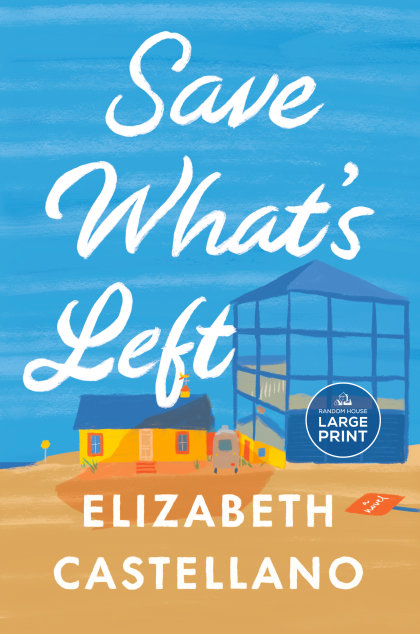
When Kathleen Deane’s husband, Tom, tells her he's no longer happy with his life and their marriage, Kathleen is confused. They live in Kansas. They’ve been married thirty years. Who said anything about being happy? But with Tom off finding himself, Kathleen starts to think about what she wants. And her thoughts lead her to a small beach community on the east coast, a town called Whitbey that has always looked lovely in the Christmas letters her childhood friend Josie sends every year.
It turns out, though, that life in Whitbey is nothing like Josie’s letters. Kathleen’s new neighbor, Rosemary, is cantankerous, and the town’s supervisor won't return Kathleen’s emails, but worst of all is the Sugar Cube, the monstrosity masquerading as a holiday home that Kathleen’s absentee neighbors are building next door to her quaint (read: tiny) cottage. As Kathleen gets more and more involved in the fight against the Sugar Cube and town politics overall, she realizes that Whitbey may not be a fairytale, but it just might be exactly what she needed.
Save What’s Left can best be described as the “un-beach read.” It pulls back the curtain on life in a beach town, revealing the true cost of a pretty view. Told from the candid and irreverent perspective of a newcomer turned local, this is a story of forgiveness, fortitude, and second chances.
STANDARD, PRIMARY, DM AND VARIANT COVERS
Standard and Primary covers are widely available through general retailers. They often have higher print runs and can be cheaper, especially during sales.
In contrast, Direct Market (DM) and variant covers are primarily sold in comic shops. DM editions tend to have more limited availability and may be more valuable to collectors.
The main differences lie in artwork style, availability, price, and collector appeal. Ultimately, the choice between standard and variant covers depends on personal preference, budget, and individual collecting goals.
PRODUCT TYPES
Comic book enthusiasts have various formats to choose from when collecting their favorite stories.
Here's a brief overview of the main types:
Omnibus
- Large, hardcover collections
- Usually contain complete runs or extensive story arcs
- Typically 800-1000+ pages
- Higher price point, often €100-€150
Oversized Hardcover (OHC)
- Similar dimensions to omnibus, but thinner
- Collect shorter runs or story arcs
- Usually 300-600 pages
- Priced between €30-€50
Hardcover (HC)
- Standard-sized hardcover books
- Collect 6-12 issues typically
- Similar dimensions to single issues, but with a hard cover
- Priced around €25-€35
Trade Paperback (TP)
- Softcover collections
- Standard comic book size
- Usually collect 4-6 issues
- Most affordable option, typically €15-€25
Other Formats
- Absolute Editions: Oversized, deluxe hardcovers (mainly DC Comics)
- Compendiums: Massive paperback collections
- Graphic Novels (OGN/GN): Original stories not previously released as single issues
The choice between these formats often depends on personal preference, budget, and collecting goals. Omnibus and OHC editions offer larger artwork and more content but at a higher price, while TPs provide a more affordable way to collect complete story arcs