

Kensington
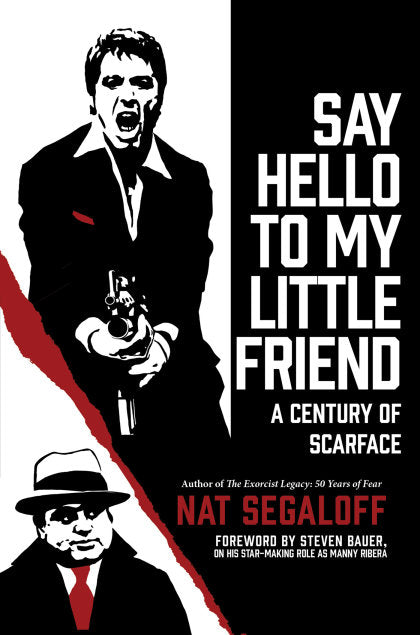
Say Hello to My Little Friend
Say Hello to My Little Friend
Couldn't load pickup availability
Collapsible content
ABOUT
WITH A FOREWORD FROM STEVEN BAUER
How many movies in the history of film have truly shaken society? Scarface did it twice.
When Brian DePalma’s operatically violent and profane Scarface debuted in 1983, the film drew almost as much fire as the relentless gunfire in the film itself. Starring Al Pacino as Cuban refugee-turned-crime-boss Tony Montana, Steven Bauer as his best friend Manny, and rising star Michelle Pfeiffer as an Eighties gangster’s moll, the movie was a remake of 1932’s Scarface—revamped for a new era of drugs, sex, and graphic violence. Attacked as both a celebration of cocaine-fueled excess and a condemnation of it, the film’s reputation only grew as the years went by. But the real story of its success started nearly a century ago—when Hollywood first fell in love with the American gangster . . .
Hollywood’s infatuation with money, power, and organized crime has captured the public’s imagination and made Scarface one of its most enduring modern myths. From a 1912 gangster film by D.W. Griffith to the 1932 hit Scarface starring Paul Muni, to Brian DePalma’s 1983 shocker, the antihero’s rise and fall exposes the dark side of the American Dream—whether it’s Prohibition Era bootleggers or modern-day drug dealers. When actor Al Pacino got the idea of doing a remake of Scarface after screening the original, a legend was (re)born—and the rest is history.
Filled with behind-the-scenes anecdotes, untold tales from Old and New Hollywood, and sixteen pages of eye-popping photos, Say Hello to My Little Friend is the ultimate guide to everything Scarface. With guns blazing and chainsaws whirring, movie biz writer Nat Segaloff tears into this pop culture phenomenon with fascinating insights, stunning revelations, and a true fan’s glee. This is a must-have book for movie buffs, crime lovers, and culture vultures everywhere.
“Brilliant. One of my favorite films. So many ways to look at it. So much I didn’t know. Nat Segaloff is that rare film scholar: as entertaining as he’s informative.” —David Morrell, New York Times bestselling author of First Blood (Rambo) on Say Hello to My Little Friend
STANDARD, PRIMARY, DM AND VARIANT COVERS
Standard and Primary covers are widely available through general retailers. They often have higher print runs and can be cheaper, especially during sales.
In contrast, Direct Market (DM) and variant covers are primarily sold in comic shops. DM editions tend to have more limited availability and may be more valuable to collectors.
The main differences lie in artwork style, availability, price, and collector appeal. Ultimately, the choice between standard and variant covers depends on personal preference, budget, and individual collecting goals.
PRODUCT TYPES
Comic book enthusiasts have various formats to choose from when collecting their favorite stories.
Here's a brief overview of the main types:
Omnibus
- Large, hardcover collections
- Usually contain complete runs or extensive story arcs
- Typically 800-1000+ pages
- Higher price point, often €100-€150
Oversized Hardcover (OHC)
- Similar dimensions to omnibus, but thinner
- Collect shorter runs or story arcs
- Usually 300-600 pages
- Priced between €30-€50
Hardcover (HC)
- Standard-sized hardcover books
- Collect 6-12 issues typically
- Similar dimensions to single issues, but with a hard cover
- Priced around €25-€35
Trade Paperback (TP)
- Softcover collections
- Standard comic book size
- Usually collect 4-6 issues
- Most affordable option, typically €15-€25
Other Formats
- Absolute Editions: Oversized, deluxe hardcovers (mainly DC Comics)
- Compendiums: Massive paperback collections
- Graphic Novels (OGN/GN): Original stories not previously released as single issues
The choice between these formats often depends on personal preference, budget, and collecting goals. Omnibus and OHC editions offer larger artwork and more content but at a higher price, while TPs provide a more affordable way to collect complete story arcs