

Beacon Press
Searching for Jane Crow
Searching for Jane Crow
Couldn't load pickup availability
Collapsible content
ABOUT
For readers of Michelle Alexander, Anglea Y. Davis, and Clint Smith
A Ms. Magazine "Most Anticipated Feminist Books of 2026" Pick
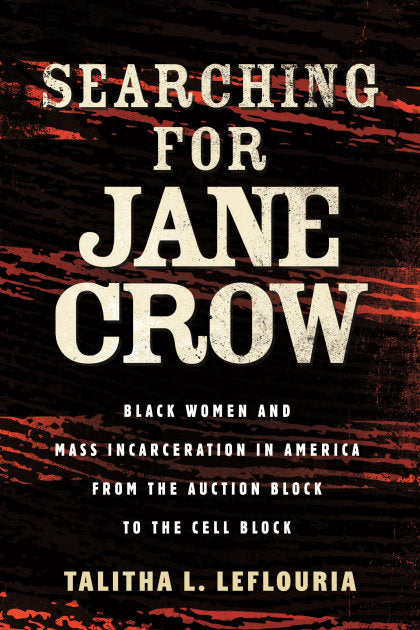
Historian Talitha L. LeFlouria centers Black women at the core of a fresh argument: that the system of mass incarceration was established as protection for the institution of slavery and the profits of enslavers and that this legacy continues today.
For centuries, Black women in America have experienced extreme rates of arrest, conviction, and incarceration in the nation’s jails and prisons, yet their experiences have often been overlooked in favor of Black men’s.
Arguing that the merger between profit and punishment continues to keep Black people bound, LeFlouria traces the connection between enslavement and incarceration, revealing how they have always been intertwined—from the domestic slave trade of 1810-1865, when an estimated one million people were incarcerated in privately owned slave jails, to the post-Civil War era when Black people were enslaved through new systems of state-sponsored mass incarceration, and through to today.
Using archival sources and personal testimonies, LeFlouria tells a new origin story of mass incarceration with the stories of numerous Black women throughout history, including:
· Delia Garlic, who was incarcerated in a slave jail and later sold to a sheriff at the height of the domestic slave trade
· Eliza Purdy, who was jailed and sold to the highest bidder a year after the Civil War ended, and
· Susan Burton, who was commodified and trafficked through a 20th-century cell block, much like an enslaved person on the auction block 200 years prior.
STANDARD, PRIMARY, DM AND VARIANT COVERS
Standard and Primary covers are widely available through general retailers. They often have higher print runs and can be cheaper, especially during sales.
In contrast, Direct Market (DM) and variant covers are primarily sold in comic shops. DM editions tend to have more limited availability and may be more valuable to collectors.
The main differences lie in artwork style, availability, price, and collector appeal. Ultimately, the choice between standard and variant covers depends on personal preference, budget, and individual collecting goals.
PRODUCT TYPES
Comic book enthusiasts have various formats to choose from when collecting their favorite stories.
Here's a brief overview of the main types:
Omnibus
- Large, hardcover collections
- Usually contain complete runs or extensive story arcs
- Typically 800-1000+ pages
- Higher price point, often €100-€150
Oversized Hardcover (OHC)
- Similar dimensions to omnibus, but thinner
- Collect shorter runs or story arcs
- Usually 300-600 pages
- Priced between €30-€50
Hardcover (HC)
- Standard-sized hardcover books
- Collect 6-12 issues typically
- Similar dimensions to single issues, but with a hard cover
- Priced around €25-€35
Trade Paperback (TP)
- Softcover collections
- Standard comic book size
- Usually collect 4-6 issues
- Most affordable option, typically €15-€25
Other Formats
- Absolute Editions: Oversized, deluxe hardcovers (mainly DC Comics)
- Compendiums: Massive paperback collections
- Graphic Novels (OGN/GN): Original stories not previously released as single issues
The choice between these formats often depends on personal preference, budget, and collecting goals. Omnibus and OHC editions offer larger artwork and more content but at a higher price, while TPs provide a more affordable way to collect complete story arcs