

Random House Publishing Group
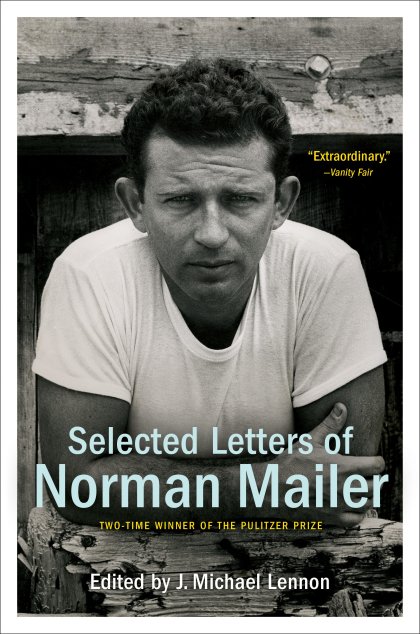
Selected Letters of Norman Mailer
Selected Letters of Norman Mailer
Couldn't load pickup availability
Collapsible content
ABOUT
Over the course of a nearly sixty-year career, Norman Mailer wrote more than 30 novels, essay collections, and nonfiction books. Yet nowhere was he more prolific—or more exposed—than in his letters. All told, Mailer crafted more than 45,000 pieces of correspondence (approximately 20 million words), many of them deeply personal, keeping a copy of almost every one. Now the best of these are published—most for the first time—in one remarkable volume that spans seven decades and, it seems, several lifetimes. Together they form a stunning autobiographical portrait of one of the most original, provocative, and outspoken public intellectuals of the twentieth century.
Compiled by Mailer’s authorized biographer, J. Michael Lennon, and organized by decade, Selected Letters of Norman Mailer features the most fascinating of Mailer’s missives from 1940 to 2007—letters to his family and friends, to fans and fellow writers (including Truman Capote, James Baldwin, and Philip Roth), to political figures from Henry Kissinger to Bill and Hillary Clinton, and to such cultural icons as John Lennon, Marlon Brando, and even Monica Lewinsky.
Here is Mailer the precocious Harvard undergraduate, writing home to his parents for the first time and worrying that his acceptances by literary magazines were “all happening too easy.” Here, too, is Mailer the soldier, confronting the violence of war in the Pacific, which would become the subject of his masterly debut novel, The Naked and the Dead: “[I’m] amazed how casually it fits into . . . daily life, how very unhorrible it all is.” Mailer the international celebrity pledges to William Styron, “I’m going to write every day, and like Lot’s Wife I’m consigning myself to a pillar of salt if I dare to look back,” while the 1980s Mailer agonizes over the fallout from his ill-fated friendship with Jack Henry Abbott, the murderer who became his literary protégé. (“The continuation of our relationship was depressing for both of us,” he confesses to Joyce Carol Oates.) At last, he finds domestic—and erotic—bliss in the arms of his sixth wife, Norris Church (“We bounce into each other like sunlight”).
Whether he is reflecting on the Kennedy assassination, assessing the merits of authors from Fitzgerald to Proust, or threatening to pummel William Styron, the brilliant, pugnacious Norman Mailer comes alive again in these letters. The myriad faces of this artist and activist, lover and fighter, public figure and private man, are laid bare in this collection as never before.
Praise for Selected Letters of Norman Mailer
“Extraordinary.”—Vanity Fair
“As massive as the life they document . . . the autobiography [Mailer] never wrote . . . a kind of map, from the hills and rice paddies of the Philippines through every victory and defeat for the rest of the century and beyond.”—Esquire
“The shards and winks at Mailer’s own past that are scattered throughout the letters . . . are so tantalizing. They glitter throughout like unrefined jewels that Mailer took to the grave.”—The New Yorker
“Indispensable . . . a subtle document of an unsubtle man’s wit and erudition, even (or especially) when it’s wielded as a weapon.”—New York
“Umpteen pleasures to pluck out and roll between your teeth, like seeds from a pomegranate.”—The New York Times
STANDARD, PRIMARY, DM AND VARIANT COVERS
Standard and Primary covers are widely available through general retailers. They often have higher print runs and can be cheaper, especially during sales.
In contrast, Direct Market (DM) and variant covers are primarily sold in comic shops. DM editions tend to have more limited availability and may be more valuable to collectors.
The main differences lie in artwork style, availability, price, and collector appeal. Ultimately, the choice between standard and variant covers depends on personal preference, budget, and individual collecting goals.
PRODUCT TYPES
Comic book enthusiasts have various formats to choose from when collecting their favorite stories.
Here's a brief overview of the main types:
Omnibus
- Large, hardcover collections
- Usually contain complete runs or extensive story arcs
- Typically 800-1000+ pages
- Higher price point, often €100-€150
Oversized Hardcover (OHC)
- Similar dimensions to omnibus, but thinner
- Collect shorter runs or story arcs
- Usually 300-600 pages
- Priced between €30-€50
Hardcover (HC)
- Standard-sized hardcover books
- Collect 6-12 issues typically
- Similar dimensions to single issues, but with a hard cover
- Priced around €25-€35
Trade Paperback (TP)
- Softcover collections
- Standard comic book size
- Usually collect 4-6 issues
- Most affordable option, typically €15-€25
Other Formats
- Absolute Editions: Oversized, deluxe hardcovers (mainly DC Comics)
- Compendiums: Massive paperback collections
- Graphic Novels (OGN/GN): Original stories not previously released as single issues
The choice between these formats often depends on personal preference, budget, and collecting goals. Omnibus and OHC editions offer larger artwork and more content but at a higher price, while TPs provide a more affordable way to collect complete story arcs