

Penguin Publishing Group
Sister India
Sister India
Couldn't load pickup availability
Collapsible content
ABOUT
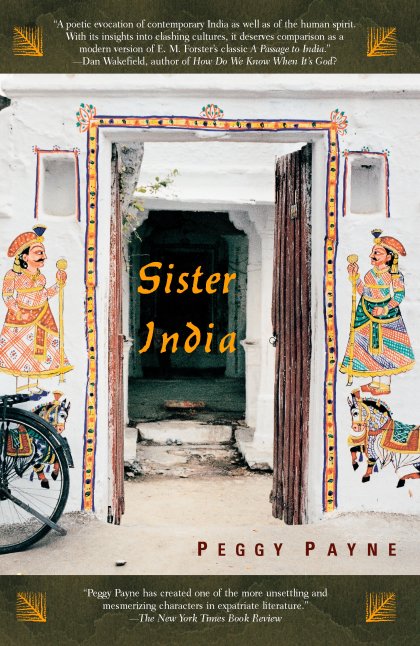
The Lonely Planet recommends the Saraswati Guest House, and meeting Madame Natraja, "a one-woman blend of East and West," as well worth a side trip. Over the course of a weekend, several guests turn up, shocked to encounter a three-hundred-some-pound, surly white woman in a sari. Then a series of Hindu-Muslim murders leads to a citywide curfew, and they unwittingly become her captives. So begins a period of days blending into nights as Natraja and her Indian cook become entangled in a web of religious violence, and their guests fall under the spell of this ancient kingdom--at once enthralled and repelled by the begging children, the public funeral pyres, the holy men bathing in the Ganges at dawn.
This is a traveler's tale, a story about the strange chemistry that develops from unexpected intimacies on foreign ground. And Peggy Payne's extraordinary talent vividly conjures up the smells of the perfume market, the rhythms of holy men chanting at dawn, the claustrophobic feel of this ancient city's tiny lanes, and the magic of the setting sun over the holy Ganges. For anyone who has harbored a secret desire to go to India and be transformed, Sister India, called "mesmerizing" by Gail Harris and "a modern version of E. M. Forster's classic A Passage to India" by Dan Wakefield, takes you on this journey without ever leaving home.
STANDARD, PRIMARY, DM AND VARIANT COVERS
Standard and Primary covers are widely available through general retailers. They often have higher print runs and can be cheaper, especially during sales.
In contrast, Direct Market (DM) and variant covers are primarily sold in comic shops. DM editions tend to have more limited availability and may be more valuable to collectors.
The main differences lie in artwork style, availability, price, and collector appeal. Ultimately, the choice between standard and variant covers depends on personal preference, budget, and individual collecting goals.
PRODUCT TYPES
Comic book enthusiasts have various formats to choose from when collecting their favorite stories.
Here's a brief overview of the main types:
Omnibus
- Large, hardcover collections
- Usually contain complete runs or extensive story arcs
- Typically 800-1000+ pages
- Higher price point, often €100-€150
Oversized Hardcover (OHC)
- Similar dimensions to omnibus, but thinner
- Collect shorter runs or story arcs
- Usually 300-600 pages
- Priced between €30-€50
Hardcover (HC)
- Standard-sized hardcover books
- Collect 6-12 issues typically
- Similar dimensions to single issues, but with a hard cover
- Priced around €25-€35
Trade Paperback (TP)
- Softcover collections
- Standard comic book size
- Usually collect 4-6 issues
- Most affordable option, typically €15-€25
Other Formats
- Absolute Editions: Oversized, deluxe hardcovers (mainly DC Comics)
- Compendiums: Massive paperback collections
- Graphic Novels (OGN/GN): Original stories not previously released as single issues
The choice between these formats often depends on personal preference, budget, and collecting goals. Omnibus and OHC editions offer larger artwork and more content but at a higher price, while TPs provide a more affordable way to collect complete story arcs