

Kensington
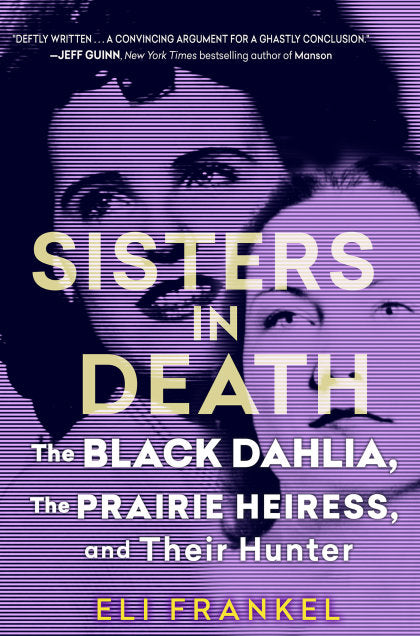
Sisters in Death
Sisters in Death
Couldn't load pickup availability
Collapsible content
ABOUT
Who killed the Black Dahlia? In this eye-opening shocker, an award-winning producer, true-crime researcher, and Hollywood insider finally solves the greatest - and most gruesome - murder mystery of the twentieth century just before its 80th anniversary.
In January 1947, the bisected body of Elizabeth Short, completely drained of blood, was discovered in an undeveloped lot in Los Angeles. Its gruesome mutilations led to a firestorm of publicity, city-wide panic, and an unprecedented number of investigative paths led by the LAPD—all dead ends. The Black Dahlia murder remained an unsolved mystery for over seventy years.
Six years earlier and sixteen hundred miles away, another woman’s life had ended in a similarly horrific manner. Leila Welsh was an ambitious, educated, popular, and socially connected beauty. Though raised modestly on a prairie farm, she was heiress to her Kansas City family’s status and wealth. On a winter morning in 1941, Leila’s butchered body was found in her bedroom bearing the marks of unspeakable trauma.
One victim faded into obscurity. The other became notorious. Both had in common a killer whose sadistic mind was a labyrinth of dark secrets.
Eli Frankel reveals for the first time a key fact about the Black Dahlia crime scene, never before shared with the public, that leads inexorably to the stunning identification of a criminal who was at the same time amateurish and fiendish, skilled and lucky, sophisticated and brutish. Drawing on newly discovered documents, law enforcement files, interviews with the last surviving participants, the victims’ own letters, trial transcripts, military records, and more, this epic true-crime saga puts together the missing pieces of a legendary puzzle.
In Sisters in Death, the Black Dahlia cold case is finally closed.
STANDARD, PRIMARY, DM AND VARIANT COVERS
Standard and Primary covers are widely available through general retailers. They often have higher print runs and can be cheaper, especially during sales.
In contrast, Direct Market (DM) and variant covers are primarily sold in comic shops. DM editions tend to have more limited availability and may be more valuable to collectors.
The main differences lie in artwork style, availability, price, and collector appeal. Ultimately, the choice between standard and variant covers depends on personal preference, budget, and individual collecting goals.
PRODUCT TYPES
Comic book enthusiasts have various formats to choose from when collecting their favorite stories.
Here's a brief overview of the main types:
Omnibus
- Large, hardcover collections
- Usually contain complete runs or extensive story arcs
- Typically 800-1000+ pages
- Higher price point, often €100-€150
Oversized Hardcover (OHC)
- Similar dimensions to omnibus, but thinner
- Collect shorter runs or story arcs
- Usually 300-600 pages
- Priced between €30-€50
Hardcover (HC)
- Standard-sized hardcover books
- Collect 6-12 issues typically
- Similar dimensions to single issues, but with a hard cover
- Priced around €25-€35
Trade Paperback (TP)
- Softcover collections
- Standard comic book size
- Usually collect 4-6 issues
- Most affordable option, typically €15-€25
Other Formats
- Absolute Editions: Oversized, deluxe hardcovers (mainly DC Comics)
- Compendiums: Massive paperback collections
- Graphic Novels (OGN/GN): Original stories not previously released as single issues
The choice between these formats often depends on personal preference, budget, and collecting goals. Omnibus and OHC editions offer larger artwork and more content but at a higher price, while TPs provide a more affordable way to collect complete story arcs