

Penguin Publishing Group
Sisters of Mokama
Sisters of Mokama
Couldn't load pickup availability
Collapsible content
ABOUT
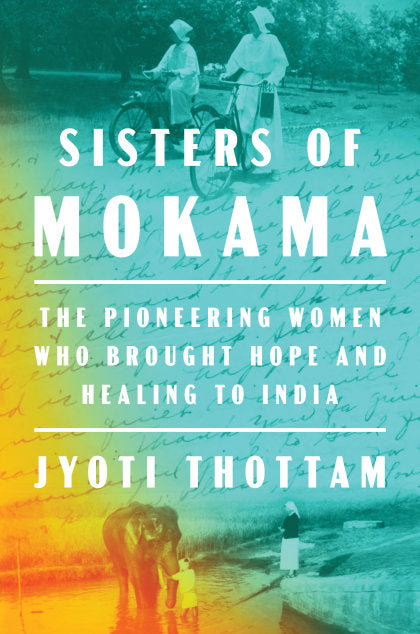
The never-before-told story of six intrepid Kentucky nuns, their journey to build a hospital in the poorest state in India, and the Indian nurses whose lives would never be the same
New York Times editor Jyoti Thottam’s mother was part of an extraordinary group of Indian women. Born in 1946, a time when few women dared to leave their house without the protection of a man, she left home by herself at just fifteen years old and traveled to Bihar—an impoverished and isolated state in northern India that had been one of the bloodiest regions of Partition—in order to train to be a nurse under the tutelage of the determined and resourceful Appalachian nuns who ran Nazareth Hospital. Like Thottam’s mother’s journey, the hospital was a radical undertaking: it was run almost entirely by women, who insisted on giving the highest possible standard of care to everyone who walked through its doors, regardless of caste or religion.
Fascinated by her mother’s story, Thottam set out to discover the full story of Nazareth Hospital, which had been established in 1947 by six nuns from Kentucky. With no knowledge of Hindi, and the awareness that they would likely never see their families again, the sisters had traveled to the small town of Mokama determined to live up to the pioneer spirit of their order, founded in the rough hills of the Kentucky frontier. A year later, they opened the doors of the hospital; soon they began taking in young Indian women as nursing students, offering them an opportunity that would change their lives. One of those women, of course, was Thottam’s mother.
In Sisters of Mokama, Thottam draws upon twenty years’ worth of research to tell this inspiring story for the first time. She brings to life the hopes, struggles, and accomplishments of these ordinary women—both American and Indian—who succeeded against the odds during the tumult and trauma of the years after World War II and Partition. Pain and loss were everywhere for the women of that time, but the collapse of the old orders provided the women of Nazareth Hospital with an opening—a chance to create for themselves lives that would never have been possible otherwise.
STANDARD, PRIMARY, DM AND VARIANT COVERS
Standard and Primary covers are widely available through general retailers. They often have higher print runs and can be cheaper, especially during sales.
In contrast, Direct Market (DM) and variant covers are primarily sold in comic shops. DM editions tend to have more limited availability and may be more valuable to collectors.
The main differences lie in artwork style, availability, price, and collector appeal. Ultimately, the choice between standard and variant covers depends on personal preference, budget, and individual collecting goals.
PRODUCT TYPES
Comic book enthusiasts have various formats to choose from when collecting their favorite stories.
Here's a brief overview of the main types:
Omnibus
- Large, hardcover collections
- Usually contain complete runs or extensive story arcs
- Typically 800-1000+ pages
- Higher price point, often €100-€150
Oversized Hardcover (OHC)
- Similar dimensions to omnibus, but thinner
- Collect shorter runs or story arcs
- Usually 300-600 pages
- Priced between €30-€50
Hardcover (HC)
- Standard-sized hardcover books
- Collect 6-12 issues typically
- Similar dimensions to single issues, but with a hard cover
- Priced around €25-€35
Trade Paperback (TP)
- Softcover collections
- Standard comic book size
- Usually collect 4-6 issues
- Most affordable option, typically €15-€25
Other Formats
- Absolute Editions: Oversized, deluxe hardcovers (mainly DC Comics)
- Compendiums: Massive paperback collections
- Graphic Novels (OGN/GN): Original stories not previously released as single issues
The choice between these formats often depends on personal preference, budget, and collecting goals. Omnibus and OHC editions offer larger artwork and more content but at a higher price, while TPs provide a more affordable way to collect complete story arcs